

Not An Audiophile – The Podcast reviews the Exposure 5510. Exposure designer, Tony Brady joins our host and qualified tech for a unique review of the new 5510 Integrated Amplifier.
Podcast transcripts below – Episode 049

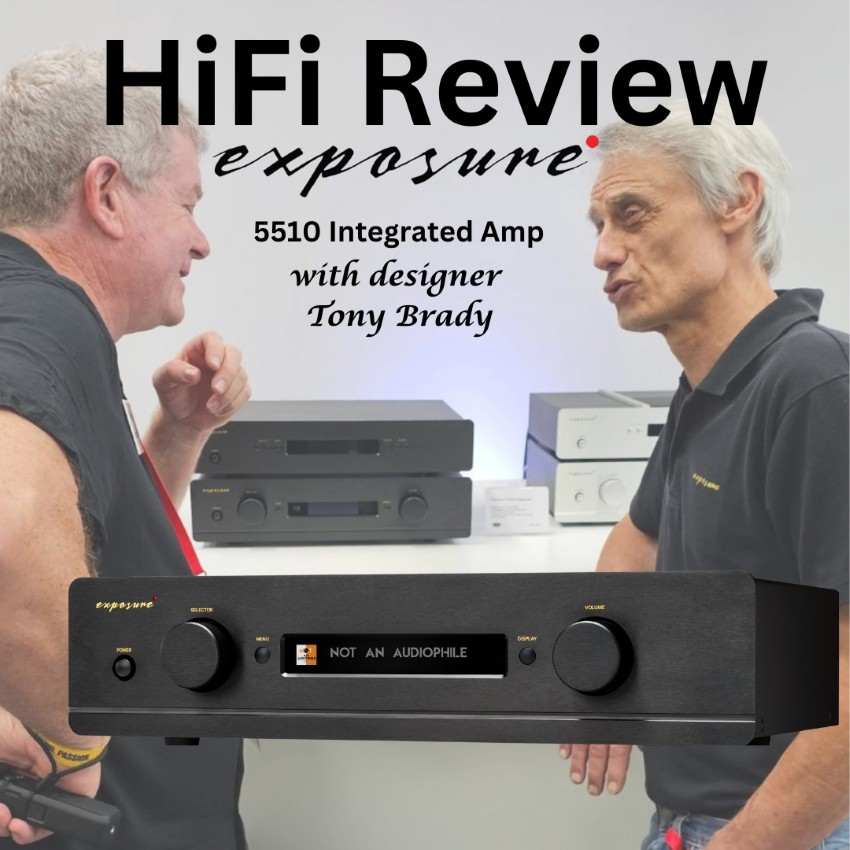
Tony Brady “Versus the 3510 integrated the preamp is a slightly more refined circuit and the power supply is more refined and on the RCA sockets we have used another board and there is no wiring. Then there is DC Servo and output stage… It’s flexible with MM, MC or DAC and a streamer for really not a lot of money…”
TRANSCRIPT
S3 EP049 REVIEW Exposure 5510 with designer Tony Brady
Andrew Hutchison: There’s two things I can say about the sound versus other components. One is I think it kind of sounds like an Accuphase amp, which is amazing because this is not as expensive as Accuphase and it’s easier to fit on a shelf. It’s nowhere near as big. It has got that kind of big, rich, effortless sound.
SHOW PARTNER DEVORE FIDELITY
Devore Fidelity, the show partner of not an audiophile. The podcast Devore Fidelity has become one of the most acclaimed high end companies in the world. And having heard the loudspeakers many times, I know why. They’re all still handcrafted in Brooklyn, New York. We love how this iconic brand captures the excitement and breath of the sound. Nothing brings you closer to the music than dvor Fidelity. For a retailer near you, visit Devore fidelity.com.
REVIEW EXPOSURE 5510
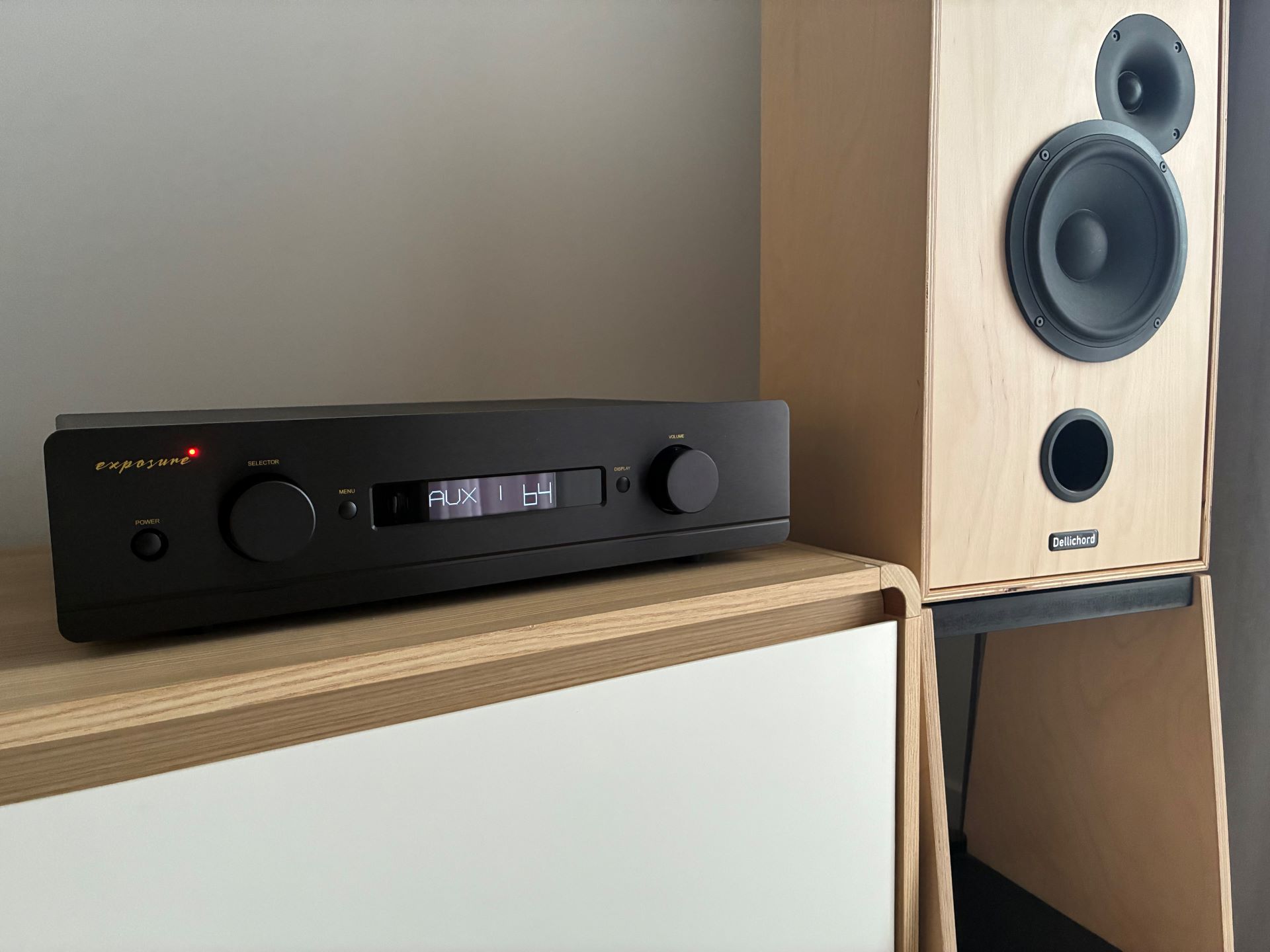
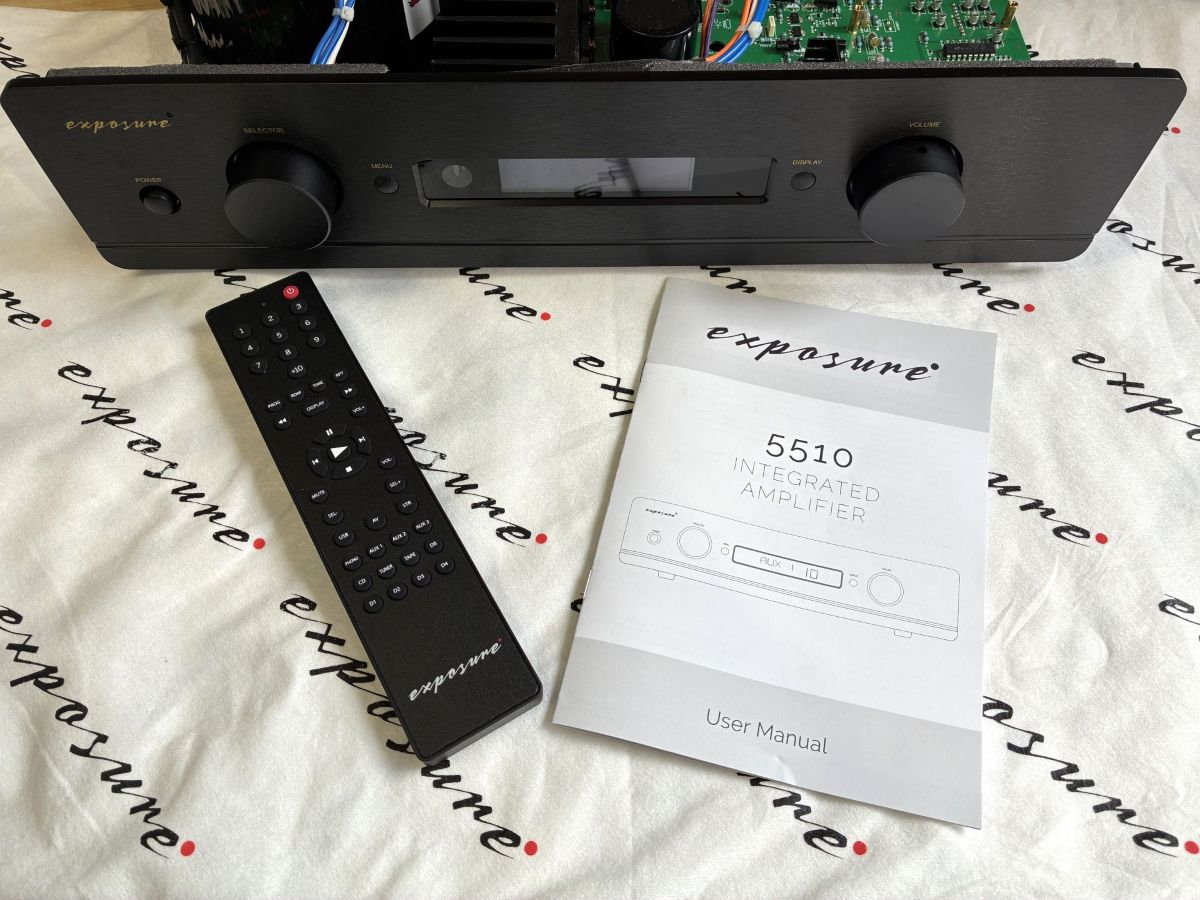
And we are back. Not an audiophile. the podcast episode 49. Today we are reviewing the exposure 5510 integrated and speaking to the designer Tony Brady. The exposure 5510 integrated amplifier. Exposure electronics most expensive integrated amplifier and their newest. I recently had the pleasure of listening to it for some weeks at home on our Dellichord 70s loudspeakers powered by the Naim unity star streamer section. In fact, that opened up a possibility of comparing the inbuilt integrated amp section in the star against the exposure. And for me, I don’t know what I always think when I’m listening to review. The guy’s about to rave lady is about to rave about the product they’re talking about. But I’m going to. I guess when you review something and it’s God awful, you just sort of put it down in the bottom drawer, send it back to the supplier, what have you and we’ll never speak of it again. this is not the case with the Exposure. It’s a delight. In fact, as a Naim fan of many, many years, I have to say, I’d much prefer to listen to the exposure. The Naim is taught. It’s a little kind of recessed in the top end. It’s as we know, fast and I say taught in the base. The exposure is everything the Naim isn’t. It’s layered, it’s detailed. The base is got this beautiful articulation and weight and extension which the Naim kind of lacks. It’s got a real charm to the sound. It’s sweet. Does it sound like other exposure amps? Absolutely. and I think when we speak to Tony, we find out why, because there is a history. He doesn’t start with a clean Sheet of paper. He starts with an existing design and improves it. But I’ll let him tell us that in his own words. But I love the sound. It is exactly what I just said. I’m not going to go on and on about it. You have to listen to it. the problem with hifi is that when you get past entry level equipment and you’re looking for genuine improvements, you are going to have to go and listen to things or borrow them or somehow get them into your system. A helpful dealer will allow you to hear this amplifier on similar loudspeakers to your own. And you should be able to. And maybe at that point you can try it at home. But it is a delight. I felt you know it was one of those products that I did not want to give back. the less expensive exposures start from 3, 4, $5,000. So you know, don’t feel like we’re talking about a brand that only makes expensive products. In fact exposure is kind of the opposite. It’s a very value for money orientated company. the state appearance is part of that equation. The hardware they make the amplifiers with is very similar across the rang. This helps to keep costs down. the small footprint, the relatively thin case makes it easier to ship and therefore less expensive. There’s less raw materials. You don’t have to fill the front panel up with vu meters, or something. Otherwise it becomes a very plain box. it is full inside. And we’ll talk about that after we speak to Tony the designer. when I pull the lid off and have a look and actually see what is inside. But the key features Tony will also tell us about, but I’ll just summarize them here. There is no standby circuit. It is a hard power switch. On, off. So when it’s off it’s absolutely off. There is a remote control for volume. It works very well. You can set up in the menu, there is a display on the front panel you can set the switch on. Volume control. The battery flap is very hard to get off the remote. I spent 10 minutes, in fact I spent 10 times longer trying to get, get the batteries in the remote that I did to plug the amplifier
00:05:00
in and get some music out of it. To get music out of it, you apply power, an input source, a pair of speakers via two pairs of banana sockets. So when I say two pairs they’re not switchable either. So it’s. If you, if you, you know by wiring you can just have literally two sets of Cables you don’t have to join the amplifier pair together if anyone still does buy wiring. So I set hard power switch. Just banana sockets. A remote for volume and a few other functions, you know, such as mute and input select. Lots of spare buttons you’ll never use. The battery flap is hard to get off. Lever it down with your thumb as you normally would, and then flick it out from the bottom on the thin edge of the base of the remote. That’s what my notes tell me. That’s how I eventually got it open, put the batteries in. It works really well. You can read the display from the couch because of it’s quite a large attenuation readout. So you do know where your volume’s at if you’ve flicked it to another input, so you don’t flick to the right input and suddenly it’s super loud and it just sounds wonderful. It’s rich, layered detail, clean, sweet. It’s all those good things, but probably the most useful. there’s two things I can say about the sound versus other components. One is I think it kind of sounds like an Accuphase amp, which is amazing because this is not as expensive as Accuphase and it’s easier to fit on a shelf. It’s nowhere near as big. It has got that kind of big, rich, effortless sound that I feel like Accuphase has a lot of the time. I think there’s a precision to the sound of the exposure. Maybe. No, I’m not going to say superior. That’s a bridge too far. But you need to have a listen. Not that a $30,000 or $20,000 Accuphase is on your shopping list. When you’re looking at an exposure 55, 10, it’s a more exuberant, lively, bigger sound than the Naim the Naim is perhaps more precise. But it’s ultimately with this loudspeaker synergy, it’s ultimately a little dry, cold and uninteresting. And the exposure’s not so yeah, a little bit of synergy with the Dellichord 70s that we used for this review. A 6 and a half, two way large ish box, quite a neutral speaker but ah, just. Yeah, the sound was thoroughly enjoyable. with that loudspeaker with 5510. Look, I think we’ll speak to Spork, we’ll speak to Tony. He answers a number of my questions about how this amplifier was developed and and what’s inside the box. And then after we m. Speak to Tony, I’ll lift the lid and describe you, know what I found, the quality of the components, the general layout, the way it appears, what I could see in there. And of course there’s pictures, of that internal exploration, on the webpage for this episode. Thanks for listening. Let’s talk to Tony
EPISODE SPONSOR MARCH AUDIO
March Audio. March Audio is a proud episode sponsor of the not an Audiophile podcast. With a mission to provide superb technical performance and exceptional sound at modest prices, Alan March has designed a range of power amplifiers, a, preamplifier, and a selection of stunning loudspeakers that you should check out now at March Audio.
TONY BRADY DESIGNER EXPOSURE HIFI
Well, when I spoke to you at Munich earlier last year, you told me that really it’ll be better than the, than. Than the 3510. But I think it’s quite a, quite a lot better actually. And certainly that’s what I’m telling people. So you sort of were playing it down, but I mean that is, that’s kind of your way.
Tony Brady: Yeah, yeah, yeah. So, because people may get confused because the, the outlook is not so very different to a 35 10. The casework is the same except for the front panel.
Andrew Hutchison: Yeah.
Tony Brady: but the internal construction is different and the transformers upgraded a little bit. power is up a little bit, but not very much. but the, the power amplifier is modified compared to a. To a 3510 integrated or stereo. It has a DC servo like we put in our mono amplifiers.
Andrew Hutchison: Okay.
Tony Brady: And that gives you a very good, tight bottom end.
Andrew Hutchison: It does.
Tony Brady: So saves having a feedback capacitor in the, in the in the loop in the signal path effectively. So, yeah, it sounds better.
Andrew Hutchison: It absolutely does. And it’s one of my comments. So I should point out to the audience that I’ve listened to this without speaking to Tony. I borrowed the amp from the local distributor. He was very kindly, very kind, to loan it to me. And the things that I noticed that I wrote down were exactly that. The, the. The. The delicacy and the accuracy and, and yes, the grip of the bottom end. And it’s kind of the extension in the bottom end. I don’t know whether that’s got much to do with, with.
Tony Brady: Well, you’ll sort of get a more extended bottom end. But you don’t just want lots
00:10:00
Tony Brady: and lots of bass. It mumbles along. You want a nice tight base. so the mid range is clear.
Andrew Hutchison: Well, it does both of those things. And that, and that is exactly what my notes say. Is that the, the bass is not exaggerated. It’s completely real accurate. But it has this way about it that’s just kind of effortless and clean I guess.
Tony Brady: And of course I’ll tell you a good test. Put a small pair of speakers on it.
Andrew Hutchison: Yeah.
Tony Brady: And that’s. If you put a small pair of speakers on a big amplifier, you get to hear what the thing is really doing. Well actually that’s kind of shows it up.
Andrew Hutchison: It’s kind of actually what we’ve done. I used our almost our own, from our own range of delicate loudspeakers. Used our most inexpensive model, a six and a half, two way. but it’s in quite a large ish box. It’s a wide baffle, sort of old school sort of loudspeaker. And the matching, it just, it just. I’ve never heard them sound as delightful. It’s a bit, sounds a bit weird saying that about.
Tony Brady: Even at low level product.
Andrew Hutchison: Absolutely. Talking about the mid range, there’s a real delicacy, a real. There’s layers of information. There’s A cleanliness, but lacks sterility. It’s just a it’s. I mean it’s a typical exposure amp, I should say. And, and I guess my question to you should be what is the exposure sound? Do you think? And do you. I mean to me it’s this. It’s such an honest difficulty. Well, they’re an honest sounding amplifier. They’re not particularly colored. Yeah, no, no.
Tony Brady: Is it, is it the way neutral. They don’t have to emphasize anything.
Andrew Hutchison: No, they just let everything that comes in through. Yeah. Open. Yep.
Tony Brady: Yeah. nice open amplifier, tight bass, clean treble is what I tried to go for. I mean it’s not exaggerated, not rolled off too much.
Andrew Hutchison: No, it’s, it’s. Is the recipe as simple as that? As far as your goals, I take
Tony Brady: it essentially because when you design these things. Well, I can, I can see the sound. I know what it sounds like when I’m drawing it.
Andrew Hutchison: See this is really, this is. Now this is why I wanted to speak to you because you seem to know this. I say to people, he knows the sound of every transistor that he uses. Is that a, is that a decent thing to say about your knowledge of.
Tony Brady: Well, I’ve never listened to every transistor individually. I used to do stupid things like that. It would take a lot of time. Well, yeah, and it’s, it’s not very useful in the end of the day, you know, because you have to make an amplifier consisting of a lot of parts and you’ve got to listen to all of them. Yes, of course. Resistors listen to sometimes capacities. Yes. Depends on whether we put certain things in certain positions. It works very well. And other things you could put stand apart. It makes no difference.
Andrew Hutchison: Yeah.
Tony Brady: You don’t have to sort of make some product so it’s very, very expensive. Just because you put a lot of expensive parts in it which don’t do nothing. Exactly. I got against boutique amplifiers full of, you know, really expensive parts and you think, well, still don’t sound any good because you circuit basically. So you know, we, we build, we build amplifiers from good parts, give us good reliability and the more expensive amplifiers have better parts in signal path for example and those we have listened to. And of course when you’ve got a portfolio of amplifiers or units, you know it’s going to sound like anyway. To a degree.
Andrew Hutchison: Yeah, yeah.
Tony Brady: Because nothing’s brand new so you know you’re only continuing on from something else.
Andrew Hutchison: Yeah.
Tony Brady: So you’re either going up. Yeah.
Andrew Hutchison: You’re refined so you’re. Yeah. You’re refining ideas that you’ve been using for probably many years. I would assume. Getting back.
Tony Brady: Yes, exactly.
Andrew Hutchison: Getting back to that comment you made about you. You feel, you know how it’s going to sound as you’re drawing the circuit. What, what can you tell me about that?
Tony Brady: Well, it’s just that there are certain elements that get going, you know, that sound good. DC Server is just one example.
Andrew Hutchison: Yeah.
Tony Brady: but the circuit, structure, it’s not a lot of. It’s common between amplifiers anyway. But that as you go the range it gets more more refined, more complicated as well. But you’ve got lower figures, lower distortion, things like this and that’s why you do it. But of course they’ve got their own challenges because they’re more complicated circuits take more, more work sorting out. but as you’re drawing them, either the circuit or the circuit board.
Andrew Hutchison: Yes.
Tony Brady: sometimes I think, oh, I’ve got some space there to do something else and I stick something in because it’s all manual drawn. It’s not, it’s not CAD as such. I do use the CAD manually.
Andrew Hutchison: Yeah. Okay.
Tony Brady: Because I used to tape up layouts so I don’t do auto routing at all.
Andrew Hutchison: Oh no, no, no, no, no, no you don’t. Yeah.
Tony Brady: All the tracks on the board, they’re, they’re short as it can be.
Andrew Hutchison: Yeah.
Tony Brady: You can individually space them as you want away from powers lines if you. Signals and things like that. But as you’re drawing it, you already know the sound because that’s why you’re drawing it in a certain way.
Andrew Hutchison: Yeah, yeah.
Tony Brady: So they’re drawing the circuit
00:15:00
Tony Brady: to sound a certain way, not, you know, what elements of circuits you need in there. And sometimes you can get a bit more in and sometimes you have to put something in there because it doesn’t work very well.
Andrew Hutchison: Yeah.
Tony Brady: but that’s all part of it. But basically I can see the sound of. I already know.
Andrew Hutchison: It’s amazing.
Tony Brady: And that’s just experience, really.
Andrew Hutchison: Well, speaking.
Tony Brady: Not the first amplifier. The first amplifier, you do all the work and all the struggling.
Andrew Hutchison: Yes.
Tony Brady: As you go on. Yes, yes. You know, he sort of, kind of gets easier.
Andrew Hutchison: So just to put a point on that. So I. I don’t know when you drew up or designed your first amplifier, but was it in the very early 80s or some. Or you prefer not to say?
Tony Brady: Oh, no, this is in the 70s. I designed a power amplifier. Yeah. In a pub when I was 16. Because we’ve just. We’ve been to the college lecture in the morning, we’ve been talking about transistor amplifiers and I thought, well, I’ll just go and draw one. I never made it, but it was an exercise. Interesting exercise anyway. And it kind of went from there, you know.
Andrew Hutchison: Oh, yeah.
Tony Brady: Drinking and drawing.
Andrew Hutchison: Well, there was. There might be the difference between you and I, because when I was sitting in a classroom at 16 years of age learning about transistor amplifiers, I had a lot of trouble remembering how that thing worked. And you went off down the pub, had five beers and drew one up. That no doubt would have worked if you’d built it. I guess that’s why you build amplifiers for a living. and I don’t. I just fix the bastards. So it, Yeah, it’s, to zip back to the 5510 for a second. So this is kind of currently your latest piece of work from when you started in the. In the late 70s?
Tony Brady: Well, kind of, yeah, yeah, yeah. I mean, I mean, I mean, it’s.
Andrew Hutchison: It’s, Look, I. It’s not an inexpensive amplifier in this country. I think it’s about $9,000 or something, which, you know, I guess is over. Does it sell in the UK for about four and a half thousand pound or something like that?
Tony Brady: 600, yeah.
Andrew Hutchison: Yep. So it’s, But on the other hand, the way it sounds, I mean, it’s a bit of a bargain.
Tony Brady: Deceptive.
Andrew Hutchison: It is very deceptive.
Tony Brady: It’s actually we did a lot of work.
Andrew Hutchison: Yeah.
Tony Brady: Work on noise and distortion, a humming noise, particularly on the boards.
Andrew Hutchison: Yeah.
Tony Brady: So you know all your. The way you just see an amplifier, there’s things you’re not seeing. Some of it’s in the layout. How you do. You had to make it quieter for example. M. So you know, there’s a lot of extra work in things in terms of that. But the circuit’s fairly straightforward.
Andrew Hutchison: Yeah, yeah. But you’ve. Versus a 3510 integrated, you’ve added what you mentioned, the DC servo and the output stage.
Tony Brady: Yeah.
Andrew Hutchison: There’s other differences.
Tony Brady: The relay attenuator, of course.
Andrew Hutchison: Ah yes.
Tony Brady: The preamp is a slightly different circuit. It’s more refined and the power supply is more refined as well. And the layout of the amplifier. I don’t know if you took the lid off or not.
Andrew Hutchison: I’m going to.
Tony Brady: But on the.
Andrew Hutchison: Yeah, I’m going to. Well, I mean I.
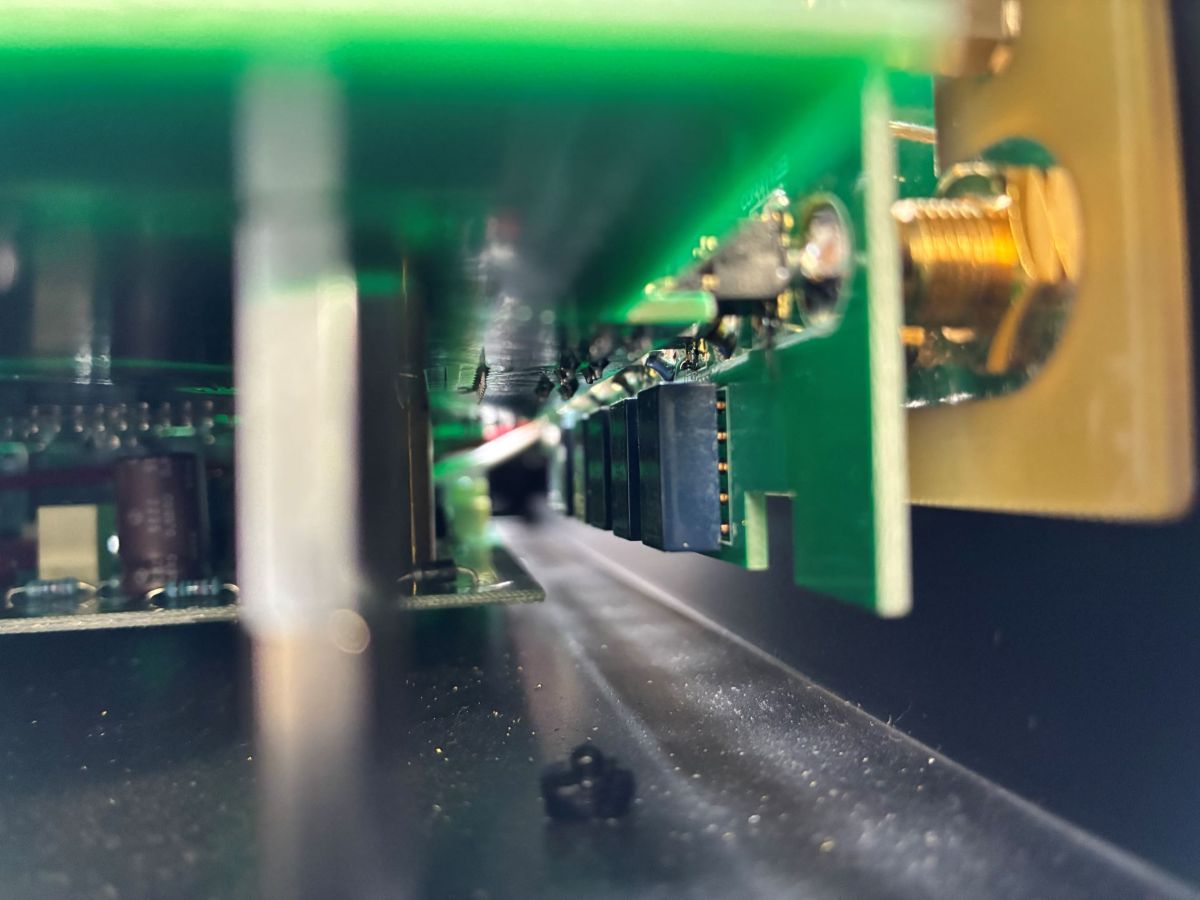
Tony Brady: On the RCA sockets you’ll see that we’ve used another board at the back and the relays are on there. There’s no wiring.
Andrew Hutchison: Oh, okay. So the relay switching to the input is actually right next to the input socket.
Tony Brady: Almost all of it. Yes. Except for For the phono board.
Andrew Hutchison: Yeah.
Tony Brady: Which has to stay on the main board.
Andrew Hutchison: Yes.
Tony Brady: But you’ll see this when you take it apart in. In reference to 3510 integrated. You’ll see the difference there.
Andrew Hutchison: Yeah. Okay.
HeyNow HiFi
We all know a great hi fi system is more than the sum of the parts. Compatibility is really hard to find, but it is possible. And a well curated, well crafted system is pure pleasure. Let hey now hi fi use their experience to help you experience that pure pleasure. Hey now hi fi.comau and. And we are back. Hey step stepped attenuators. There’s. I’m sure there’s a right way to do it. What? What is.
Tony Brady: There are several ways to do it. Yeah. I prefer a complicated one, but for reduction it’s not. You don’t want that. so the old MCX we did a 15 relay attenuator on each channel.
Andrew Hutchison: Yeah.
Tony Brady: So. And that had less steps than we’ve got in a 5510. The 5510’s got seven relays.
Andrew Hutchison: Okay.
Tony Brady: And so they’re good quality gold parts. They’re actual mechanical relays, not reeds. We use reeds in the MCX before.
Andrew Hutchison: Okay. Now are these then switched in a sort of a combinator, a combination that allows you to
Tony Brady: Yes, it has to be mapped. Yes, yes. It’s essentially, it was. Ah. There’s 99 steps.
Andrew Hutchison: Yeah. Okay.
Tony Brady: For 1 decibels they’re not accurate 1 decibels in, in the step size, but they are pretty accurate between channels.
Andrew Hutchison: Well that’s probably the joy of a stepped attenuator, isn’t it? When you say pretty accurate, you mean exactly right? You mean
00:20:00
Andrew Hutchison: pretty much completely accurate. Really? Because I guess the, the differences in the resistors are averaged out to some degree because of the combinations. Is that sort of.
Tony Brady: That’s right, yeah.
Andrew Hutchison: So, so it’s, it’s probably just standard
Tony Brady: 1 and 1% parts. Yeah, it’s very, very good.
Andrew Hutchison: Yeah. Yeah. Because see, I guess this is what this amplifier is. It’s. It’s just a refinement in a number of areas over other designs and of course an improvement in like you say, power and other, other assets like quality of components. But is there probably. It sounds like there’s at least 10 or 15 subtle little. Some of the not subtle like the stepped attenuator, but there’s these little subtleties add up to a big thing at the end of the day.
Tony Brady: That’s right, yeah. Yeah. It’s not immediately visible.
Andrew Hutchison: Well this. So here’s the thing the listeners like. But I’ve just looked up exposure on the website and all of the amps look the same. and of course that’s, I mean of course they are because what you’re trying to do, I think from an outsider’s point of view is that you’re trying to create an amplifier that offers the greatest performance for the least or the most sensible amount of money. So one way of doing that is to keep the, the casework obviously very similar across the range. Is that part of. Yes, part. It is, yeah.
Tony Brady: Yes. Because we had two ways of going with, with this amplifier. it was either big and stupid and heavy.
Andrew Hutchison: Yes.
Tony Brady: Or, or more standard. And we, we chose the more standard route because. Well, we can pick it up because we’re all getting older.
Andrew Hutchison: Yeah.
Tony Brady: And the customers are getting old in some ways. Yeah. Because otherwise we would have built a 35 kilo monster. Yeah. Practically. You know, if you do that then you’ve got a new metal work, new packing, etc, etc goes on.
Andrew Hutchison: Yeah. And you can’t ship this one.
Tony Brady: We have this new front panel.
Andrew Hutchison: Yep.
Tony Brady: New transformer, new boards of course. But basically it’s still following on.
Tony Brady: from the other models.
Andrew Hutchison: Yeah.
Tony Brady: Look, it makes m. It makes it more affordable anyway and actually it’s more
Andrew Hutchison: practical Well, I mean it’s, it is more practical because it is, it’s quite a lump but you can easily grab hold of it and move it around and I don’t know what it weighs, but I’m going to guess and say it weighs, I don’t know, 10 or 12 kilos or something like that. Maybe it’s not quite that but it feels, it’s a very solid little unit.
Tony Brady: It’s a bit more than 12. 12 or 13.
Andrew Hutchison: Oh well I’ll edit that bit out and say it’s 12. Yeah, call it 14. but yeah, it’s a sturdy little, it’s a solid little lump. the controls feel beautiful. It’s a really nice, beautifully finished off piece. But ultimately it’s for those that want, you know, function over form I guess is that, I mean that’s kind of.
Tony Brady: Yeah, yeah, yeah, yeah.
Andrew Hutchison: I mean because that’s what it does.
Tony Brady: It can do a lot of good things, you know, a lot of all round things. Because of course you can put the new DAC card in it which is common to the 3510 as well. And either the MC or the MM or DAC card basically. Choice of one, which one you want but it can make it very flexible like that. You’ve got one almost all in one unit. If you’ve got a small streamer and you’ve got the DAC board in it. Yes, you’re away.
Andrew Hutchison: Indeed.
Tony Brady: But not really that much money.
Andrew Hutchison: No, not when you start looking around. I mean I, I I don’t know whether I’m going to say it right now. I can always edit it out I guess but I, I felt that the sound was. And you may take this as an insult because you might think that Accuphase is a terrible sounding product but it
Tony Brady: had, it’s sort of, it’s well broke, it’s. It’s really, really, really well built.
Andrew Hutchison: It is well built and I watched
Tony Brady: their video that was on YouTube.
Andrew Hutchison: Oh, okay. Yeah, yeah, yeah.
Tony Brady: Interesting.
Andrew Hutchison: Well they, they do take everything to extreme, don’t they? As far as the care and the And how pretty it is and how it all clips together.
Tony Brady: Oh yeah, you.
Andrew Hutchison: But they do have a kind of a nice sound, a sort of a well rounded, a big you know, sense of scale and sort of a sense of delicacy and cleanness of the sound. And yours has got all of that at about a third of the price. But I’m not sure I’m going to leave that in this recording. But I I, but I’m just saying, you know, like I say, you may not have listened to a piece of Accuphase recently and I haven’t listened to any for a couple of months. But I, when I did last listen to some, I got the same feeling of just kind of effortlessness and I don’t know, it’s. It’s The. This audio vocabulary that we have is sometimes left wanting and I, I can’t really describe it. People need to go and listen to it and I guess that’s what you would say is that, you know.
Tony Brady: Oh yeah, yeah.
Andrew Hutchison: You just got to go and have a listen. any, Any other thoughts, Tony, on
00:25:00
Andrew Hutchison: Exposure in general? or. I mean you mentioned you working on the pre power of this same.
Tony Brady: I finished working on it. It’s just got to get into production now. And there’s a DAC as well, which is not on the website yet. We’re revamping the website very shortly.
Andrew Hutchison: Okay.
Tony Brady: And so all the new products will be on there anyway.
Andrew Hutchison: So the new dac, it’s a freestanding dac, not the, not the board that you plug into the 5510 integrated or.
Tony Brady: No, it’s freestanding. Yep. It’s got the top end AKM DAC in it.
Andrew Hutchison: Have you got. While we’ve got you on the phone and you’re a hard man to get on the phone so I might as well ask every question that I’ve ever had. have you got any thoughts on that DAC and why. Why you use that chipset or is. Gives you the sound you want. I guess
Tony Brady: it gives us the sound we want. I think it’s the best chipset around.
Andrew Hutchison: Okay.
Tony Brady: at the moment. So we’re using AKM in everything.
Andrew Hutchison: Right.
Tony Brady: They’re very nice, they sound nice and they’re very easy to implement. So that’s good. the DAC choice changed during the life of the design because their factory burnt down. So luckily we didn’t have a production model. so that changed the chipset afterwards.
Andrew Hutchison: Yes.
Tony Brady: And we basically waited and during that time of course we put the OLED display on that one and that was actually the first product to have it. And the amplifiers got it next but all the display work was done on the deck and when, when we get chips and then we would get the boards made and all the rest of it.
Andrew Hutchison: Yeah.
Tony Brady: that’s led. Led to the DAC being coming out the second after integrated. It’s actually out now although it’s not on the website yet. And then the the pre power will be out I think maybe February. It’s well late but it should be February.
Andrew Hutchison: Yeah. you’re. I’m just sitting here slightly slack jeweled. Because your output, I mean you are the guy, right? You don’t have a secret team of elves hiding in the back.
Tony Brady: No, no, no, no.
Andrew Hutchison: So can you describe your workplace? Is it very French or is it I don’t know.
Tony Brady: Well, I don’t know. I describe a French bench. It’s not full of cheese knives and empty wine glasses.
Andrew Hutchison: Well that’s kind of. Of course that’s where my imagination goes. because you think.
Tony Brady: Yes, you think.
Andrew Hutchison: I mean, yeah, Tony lives in France most of the times these days basically because he can’t get enough cheap good wine or cheese and so he’s.
Tony Brady: It’s cheap around here.
Brisbane HiFi
Andrew Hutchison: Brisbane hi Fi. I mean the clue is kind of in the title. The store is located in Brisbane and they sell hi Fi. But it’s not just another hi Fi store. It’s kind of like some kind of tropical weekend away in paradise. The people are friendly. There’s lots of interesting things to see and listen to in this case and the drinks are tasty. I highly recommend Brisbane hi Fi for a different hi Fi purchasing experience. Brisbane hi fi dot com.
HISTORY
I had other questions. and I don’t, I don’t want to hold you up. I know you’ve got a big day planned. You’ve got all that cheese and wine to get through but I I, I sort of. Can we just do a little bit of history? So you got involved with exposure 20 something years ago or something?
Tony Brady: 25 years ago.
Andrew Hutchison: 25 years ago. So from 2000 onwards you’ve been the, the brains behind the brand. Is that, is that a fair comment?
Tony Brady: Well, I mean the early amplifiers like the 2010 was not me. Yep. the amplifier, the Integrated Amphitheater 2010 and the power amp was someone else. Yes, but I came on board actually just help out with some other job as well.
Andrew Hutchison: Yeah.
Tony Brady: But I saw without the exposure at the same time because there was some, some little issues to, to be worked on and I just re engineered a little bit. And then someone else did the CD player that came along.
Andrew Hutchison: Yes.
Tony Brady: And then I did more engineering work on that. And then afterwards of course we made the classics or the new classics.
Andrew Hutchison: Yes.
Tony Brady: And they were like a revision of what John had already done.
Andrew Hutchison: Yeah.
Tony Brady: So the 28 power amp fire was basically 2.2 18s in a box with two transformers and tied it up a little bit and some Better protection circuit that actually worked.
Andrew Hutchison: Yes, yeah.
Tony Brady: Rather than the old ones. and then the preamp was just reduced the gain compared to a 21 and put a phono card in it.
Tony Brady: So it made a nice little package like that. And then after that, as more I did the more I changed it essentially.
Andrew Hutchison: So there’s a reason why I ask and that’s because a while ago in my little repair, Enterprise, someone brought in an amplifier and they said you designed it. And I think it was called a Onyx
00:30:00
Andrew Hutchison: or something or what.
Tony Brady: What? That’s right. Yeah.
Andrew Hutchison: Yeah.
Tony Brady: Yes.
Andrew Hutchison: So.
Tony Brady: Well, I started Onyx in. In the late 70s.
Andrew Hutchison: Yeah.
Tony Brady: With Craig Hill who owned a shop in Brighton.
Andrew Hutchison: Yes.
Tony Brady: And we started mate. We just. Barry. It started was really is. I went to buy a Linn from. Because I couldn’t get a Riga at that time. There was a waiting list. So in the six months time I, I saved up some money, bought a link from Craig.
Andrew Hutchison: Yeah. Okay.
Tony Brady: And his dad brought it around and then that was of course lit with a gray Sonic the Gray Song. But I couldn’t afford the cartridge because I was going for the Supex.
Andrew Hutchison: Yes, of course.
Tony Brady: And so the next year I went in for the Superex and didn’t have any stock. It let me Elite.
Andrew Hutchison: Yeah.
Tony Brady: cartridge Max Townsend. And I had that for about a month till the Supex came in. And then I bought a lentech headlamp which was kind of all right but run on batteries. It was a bit noisy.
Andrew Hutchison: Yeah, yeah.
Tony Brady: And then I made one and I took it in the cradle. So I made this. Oh, that’s interesting. We ended up making. We ended up making 20 of them.
Andrew Hutchison: Okay.
Tony Brady: but. And in that time we started working on. He was good at graphic design. He worked out sort of a case.
Andrew Hutchison: Yeah.
Tony Brady: And we knocked off free power that time.
Andrew Hutchison: Okay.
Tony Brady: And of course that became an integrated. Which was the first OE20, which we made in 1981.
Andrew Hutchison: Okay.
Tony Brady: Now and then we quickly stretched that because it was quite difficult to make and that became the classic 0821 in 1982.
Andrew Hutchison: Yeah. Now I, I mentioned this a. To allow you to you know, show off as you should, but also because it sounded so much like a current exposure like it sounded. It just had a similar way about it. Now did I make that up in my head or is there similar.
Tony Brady: Well, you might have done, but no,
Andrew Hutchison: there’s similar design ideas. Yeah. I mean it, I mean it was
Tony Brady: a smaller scale extension of.
Andrew Hutchison: It had tiny little output devices in
Tony Brady: it like, no, they weren’t that small. They were. They were 15amp.
Andrew Hutchison: Oh.
Tony Brady: Unless, our transistors.
Andrew Hutchison: Oh, I thought they had the same.
Tony Brady: I thought they had this T O3 metals.
Andrew Hutchison: Ah, no. Yeah. Not in the one I looked at though. No, they definitely weren’t to three.
Tony Brady: I know you had an OA20 stroke two or an OE22 which had BD911 912s in there and to 220 power transistors. Yeah, that’s a 30 watt amplifier.
Andrew Hutchison: Yes, that is exactly it. And there’s something about those smaller case devices that. Do you think there’s anything in that or am I imagining that as well, that they just kind of sound.
Tony Brady: Well, they look great, don’t they? They look cute. They sound good anyway.
Andrew Hutchison: Well, I mean like you’re like these things are going to explode in a second, aren’t they? But they don’t. I mean like the Cyrus one.
Tony Brady: No, no, they don’t. No, no, no. It’s completely different. No different Sonics would drive Isobarics. So it was never going to go bang.
Andrew Hutchison: No, no.
Tony Brady: And we made the sup power supply to drive Saras.
Andrew Hutchison: Is that right?
Tony Brady: Yeah, because Craig sold him in the shop. Okay.
Andrew Hutchison: yeah, righty. Yeah. So there was quite a strong Linn connection. So that’s.
Tony Brady: So that’s because people.
Andrew Hutchison: I mean there’s such a, So you’ve got the Linn Naim not little in Naim The Naim Exposure. People talk about it in the same sentence sometimes as like Naim did this and Exposure did that. And they were kind of on a parallel path to some degree. But, but when you were doing the Onyx. It is Onyx, isn’t it? O N I X or something. Is it?
Tony Brady: Yep, that’s right. Yeah.
Andrew Hutchison: Yeah. you actually were quite connected to the hit with Linn as well. But. But sort of through the back door via this retailer in, Brighton.
Tony Brady: Only through using the product. Yeah. He had no connection.
Andrew Hutchison: Oh, no, no, no. Not, not implying a. Any kind of connection to the company itself, but to the, to the product and, and building an amplifier that would drive them properly. I mean, because Isobarics and Sarah Linden
Tony Brady: failed to do miserably with the first amplifier.
Andrew Hutchison: Yes. yeah, well, I, I’m trying to. What was that? The. Is that like the
Tony Brady: L case Pay one and two, I think.
Andrew Hutchison: Yeah.
Tony Brady: Disappointment. We thought this is going to sound great. They did.
Andrew Hutchison: So.
Tony Brady: Yeah.
Andrew Hutchison: So you, you had the. Because I guess the Saras and the Isobarics are quite both low in impedance, but also I don’t know. Are they a bit all over the place or something? phase and impedance curve wise or something, I don’t know. But they’re difficult to drive, right?
Tony Brady: Hence worse. The SARS 1.8 ohms.
Andrew Hutchison: Holy.
Tony Brady: It is Sarah’s worst. I blew a set up once because I was trying to play it louder because it wouldn’t play loud enough for me. No, because I had isobarics. I had a Triumph Active system for since about 1981.
Andrew Hutchison: Yeah. Okay.
Tony Brady: So you know, that goes quite loud.
Andrew Hutchison: All right, well, I have to look. Thank you Tony Brady for your time on this early, early call that you’ve made. I really appreciate it.
00:35:00
Tony Brady: You’re welcome.
Andrew Hutchison: Thank you. Thank you for coming on the show.
Tony Brady: Okay. Good to talk to you, Andrew.
The HiFi Shop
Andrew Hutchison: Find the sound of your life by crafting a quality stereo system with the hi Fi Shop. Featuring all the brands you know and love. Riga turntables, Bowers and Wilkins loudspeakers, Exposure electronics, amplifiers and CD players from the UK and of course Sonos Faba loudspeakers from Italy. The HiFi shop helps you create your sound. Visit the team@hifi shop.com au
INSIDE THE EXPOSURE 5510
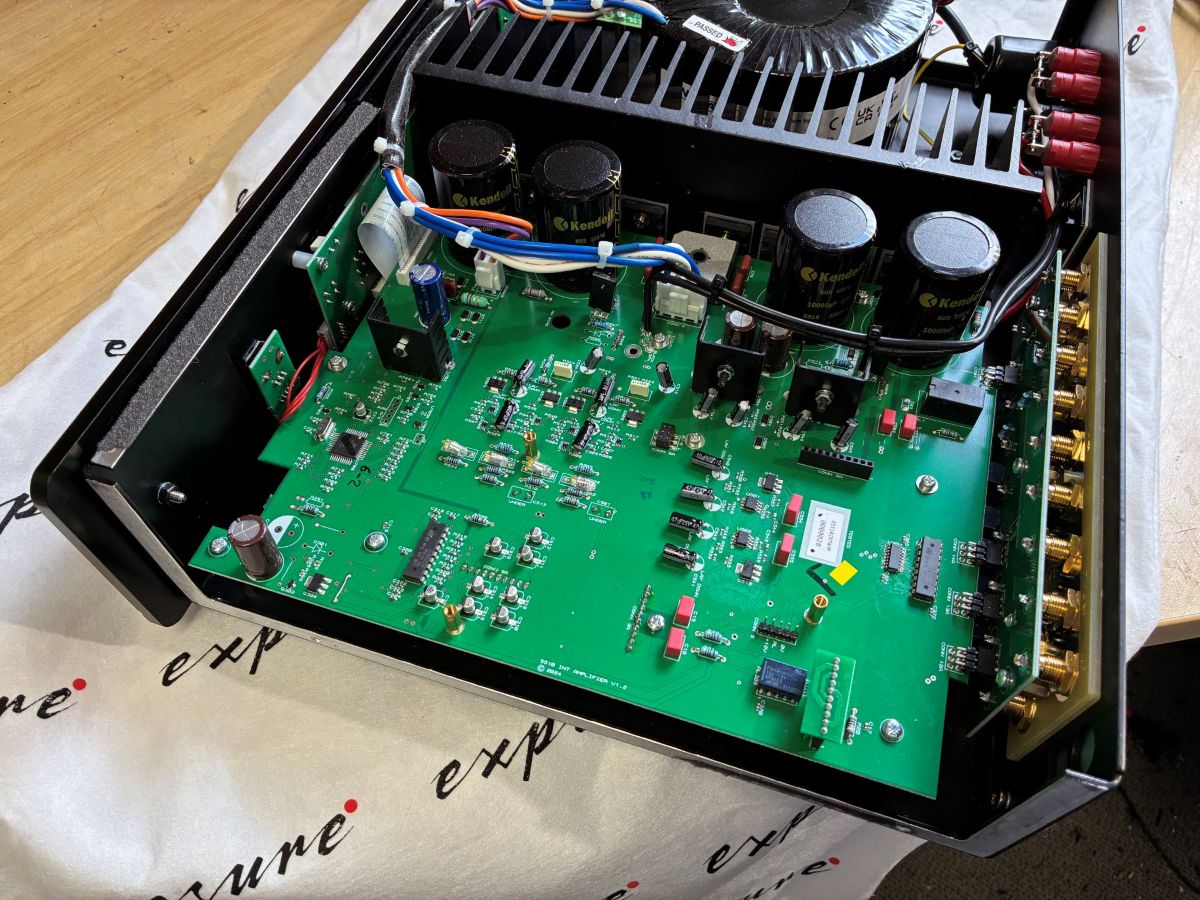
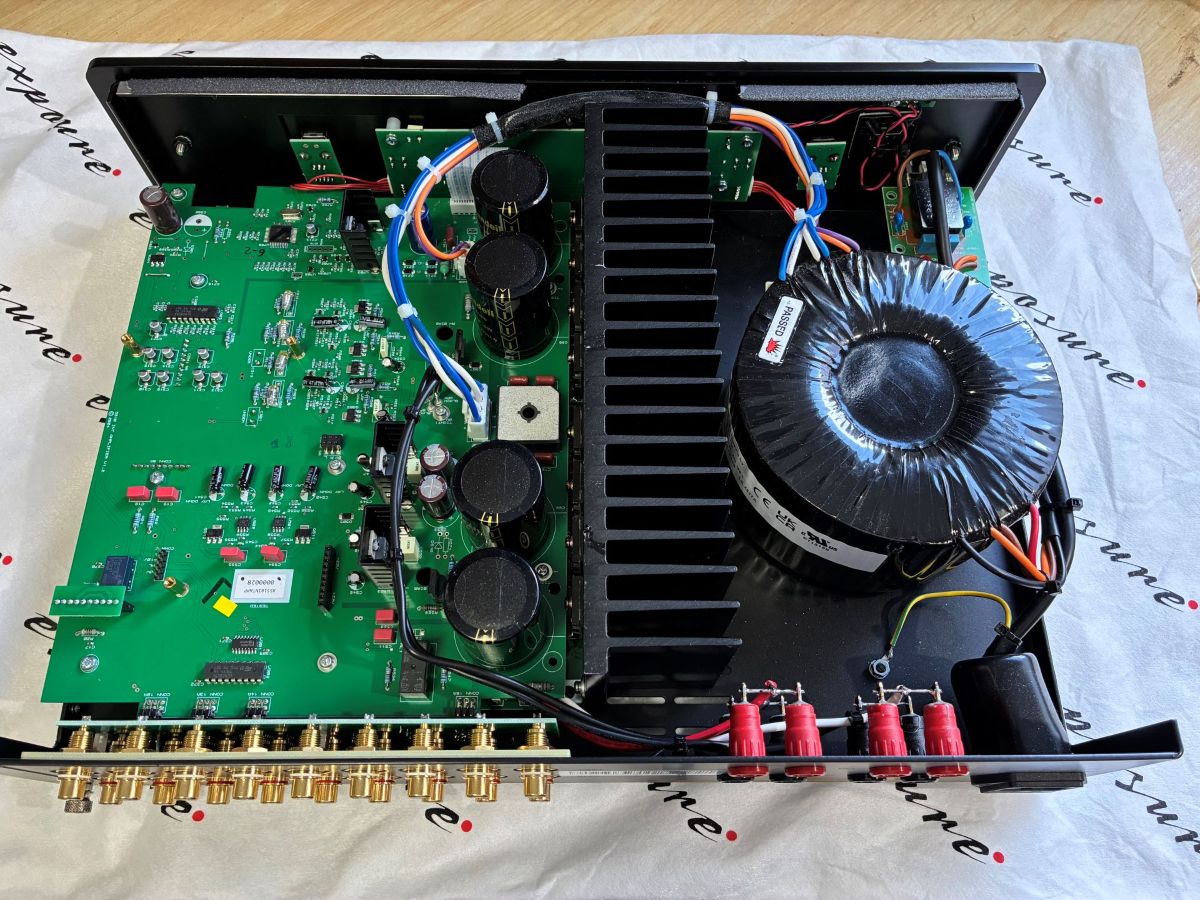
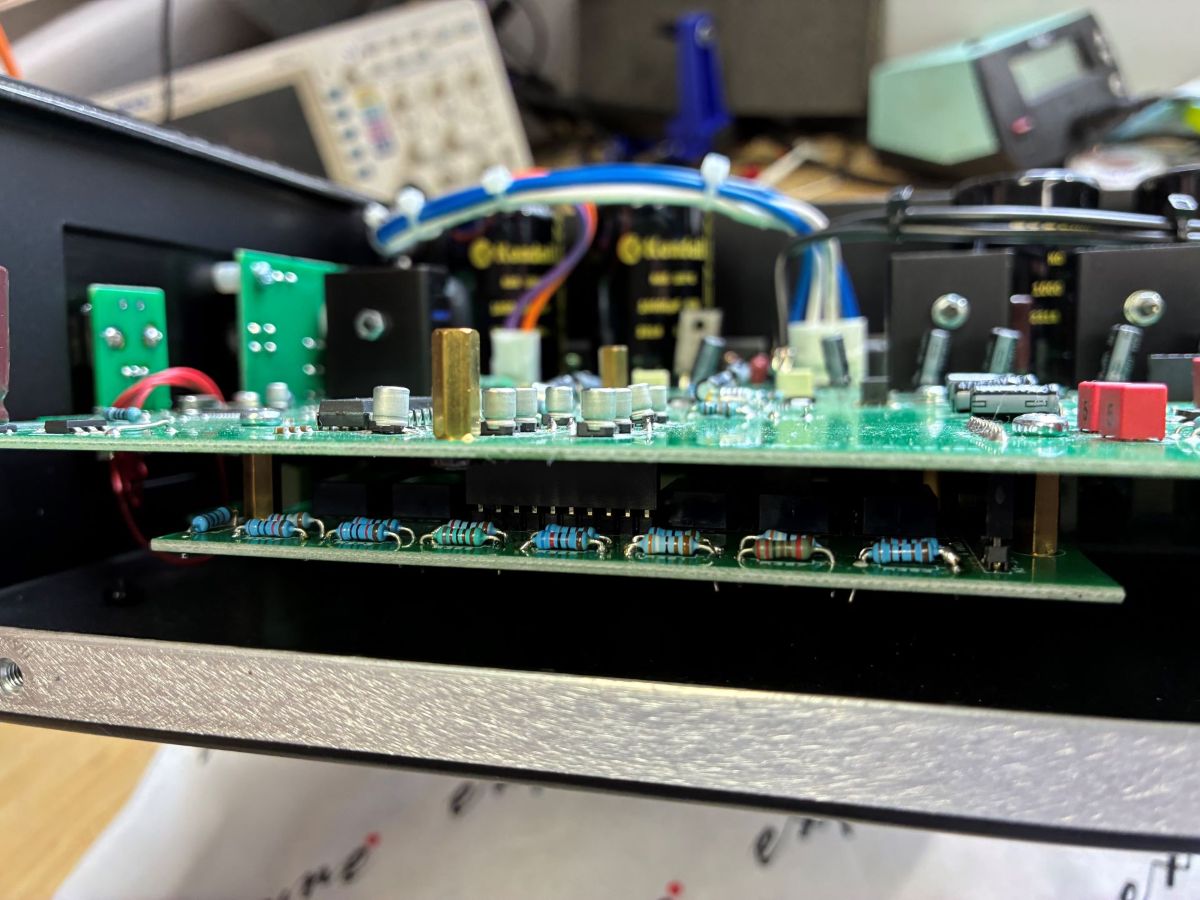
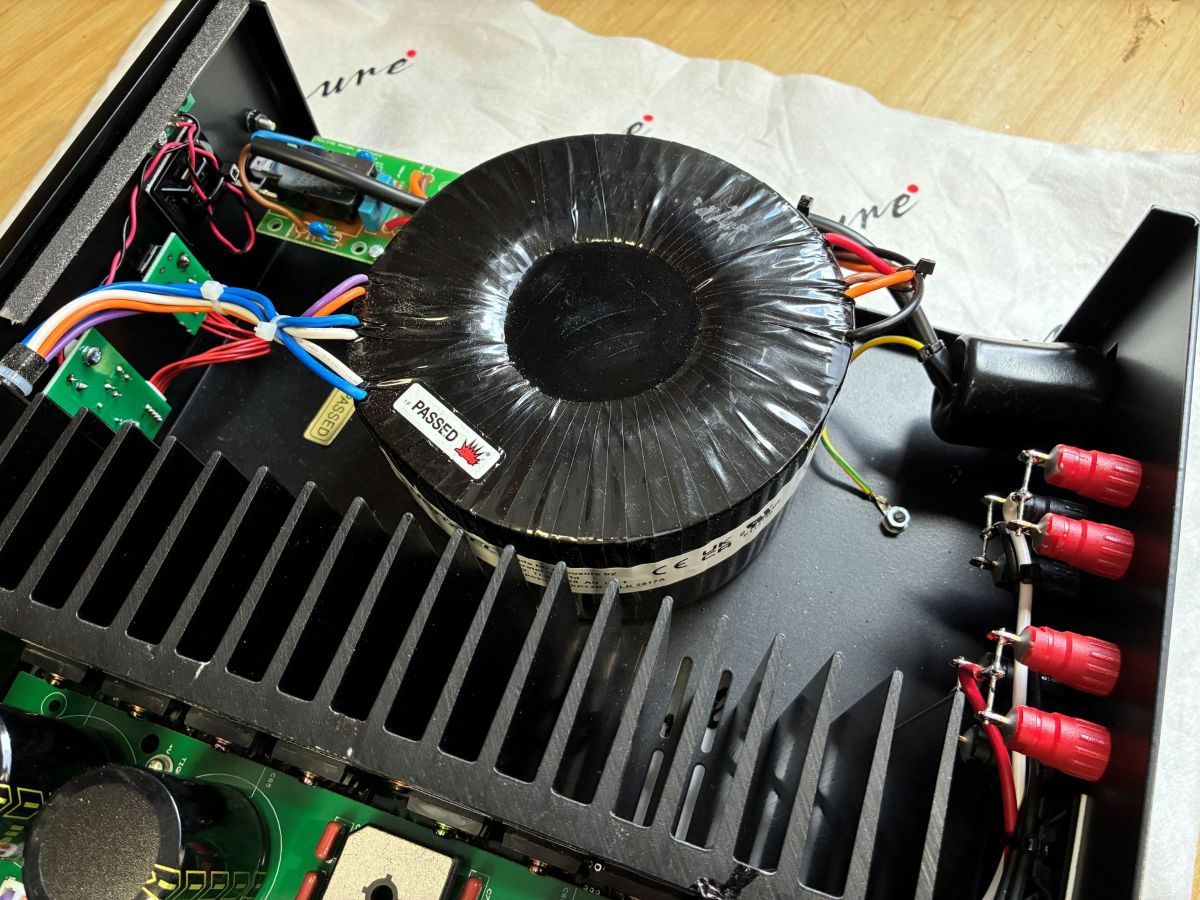
it’s all very well listening to something and enjoying it, but in this case we want to look a little more closely and with an educated eye, take a look under the lid and see what’s there. So four screws, gets you inside the exposure 5510. I noticed on the outside before I pulled it apart. it’s made in the uk, which I’m not sure that we mentioned anywhere. But in fact all Exposure products are made in the uk so there’s a Union Jack emblazoned on the box. And also the product is made there which is kind of nice. So as I say, lid removes easily. and I guess that’s because you can fit or your dealer can fit perhaps preferably the aftermarket, or additional or optional phono stage or DAC board. so there’s no point making the lid, like certain brands of amplifier, 27 screws deep just to get the lid off. And, and why shouldn’t they make it easy? What’s in there is, is not unattractive at all. Simple, straightforward, there’s, there’s no extra BS in there. For some reason. Modern amplifiers so often seem to have circuit board upon circuit board of surface mount components sitting there under the vents waiting to be covered in humidity and dust and I guess salt if you live near the sea and then corrode away and that’s the end of that. Now that’s not the case here. This is a very simple circuit board. It’s not clustered in components. Yes there is some surface mount components but it’s not tiny and it’s highly unlikely to be as easily corroded as most. There isn’t a huge amount of ventilation. the ventilation is sparse, centered directly over the large heatsink and it is a large heatsink. lots of aluminium there. And interestingly the aluminium lid is super light. Completely unlike once again a lot of other amplifiers that use a heavy sort of mild steel lid with you know, half a brick glued to it just to give the amp some heft. in this case the heft of this amplifier as discussed with Tony is about 1314 kilos. It is all in the rather expensive components inside obviously mostly the chunky toroidal transformer. So big heatsink, big toroidal, big filtering capacitors made in the uk, sorry made in Europe I should say, other rather you know immediately obviously high quality components. Toshiba transistors and Elna capacitors abound. As I mentioned, some surface mount components it’s hard to get away from. That’s literally how electronics are made these days. and for the obvious reason you can get a circuit board assembled by a robot very rapidly. interestingly the other boards, some of the other boards hidden away. The the stepped attenuator board under the main board which is not clearly visible once you first lift the lid off you have to look sideways and there it is. There is a sneaky photo on the website, on our website, not an audiophile.com where you can see these inside photos and you’ll see the set attenuator board under the main board and then of course there’s the rear board Tony alluded to in the interview with the relays, you know, switching the inputs right there at the socketry. Speaking of socketry, good quality socketry individual sockets, not some plastic array of PC mounted ah, sockets. They’re proper screwed down sockets. The RCA inputs I’m referring to and outputs, and the aforementioned banana sockets at a glance appear to be UK made ones from that company that I’ve managed to forget the Naim of. But they’re not an inexpensive piece. Very good quality. In fact everything in here looks like it will last a long time. I guess that kind of wraps it up. It’s it’s a simple, straightforward, or should I say deceptively simple straightforward, actually quite complex amplifier. Much more so than some of the more entry level. Well, there’s only two other integrators in the range. Right. So the 2000 Series Ones is, is quite straightforward. 3500, 3510 a little bit more. So, this is an all out effort. As Tony alluded to, quality, simplicity, careful design, no bs. Premium components. Keep it simple, make it affordable. Let’s face it, we’re building this thing to listen to music, not sort of explore the wonders of electronic engineering. All right, thank you folks, thank you for listening. I ah, really appreciate you tuning in.
00:40:00
I will be back next episode. Episode 5050 a half century. Who would have thought it? Talk to you then.
StereoNet and Soundstage! Australia
And a big thank you to stereonet and Soundstage Australia for their continuing support of this podcast. Stereonet has probably one of the most popular audio related forums in the world and the classifieds are amazing. All sorts of gear comes up for sale and of course Reviews, news articles, etc. Which is well worth a look. Soundstage Australia, Edgar Kramer writes a magnificent, highly detailed and careful review. Great photography, interesting products and over@soundstage Australia.com you can see those. So stereonet.com, soundstage Australia.com have a look now.
00:40:56