

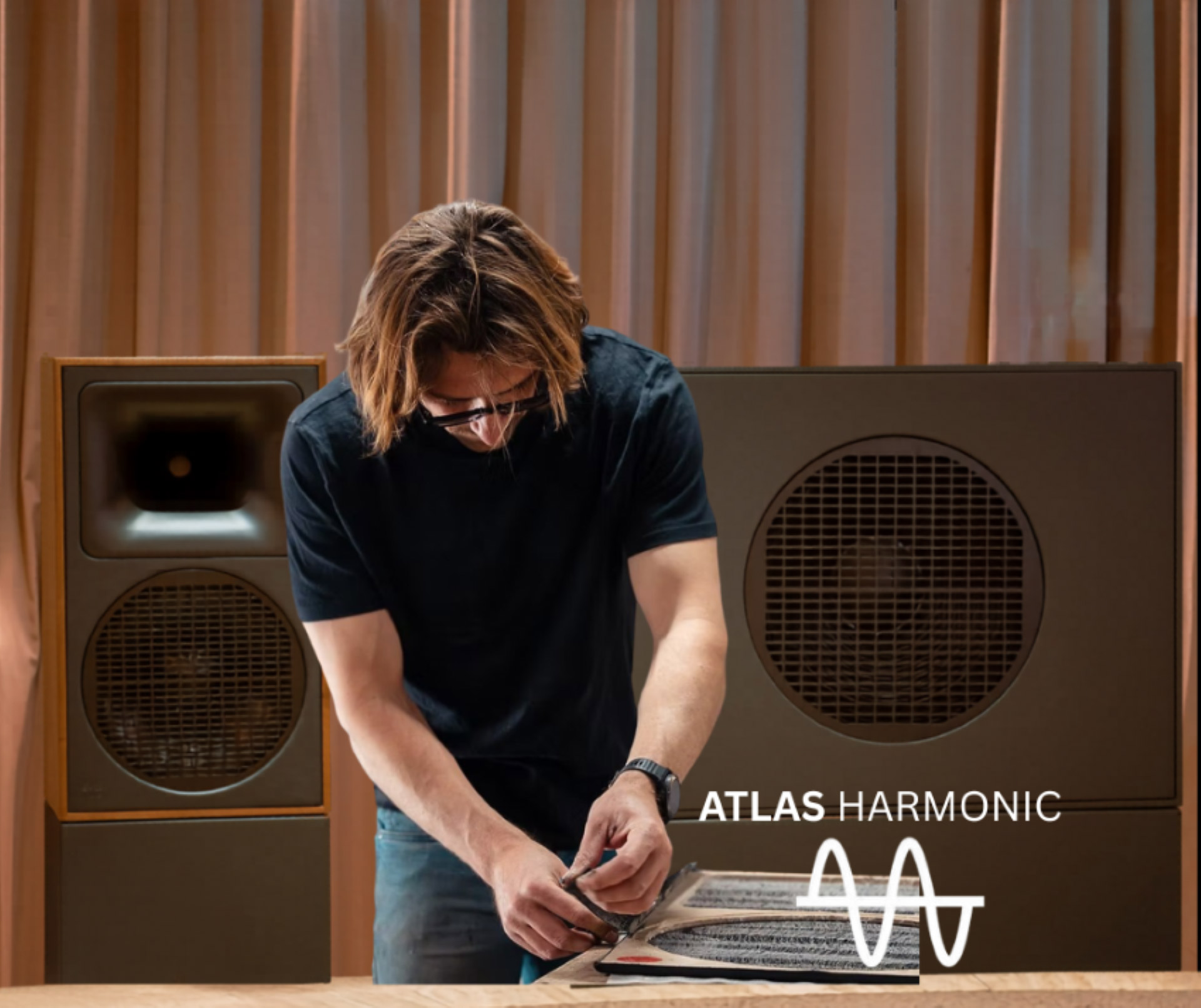
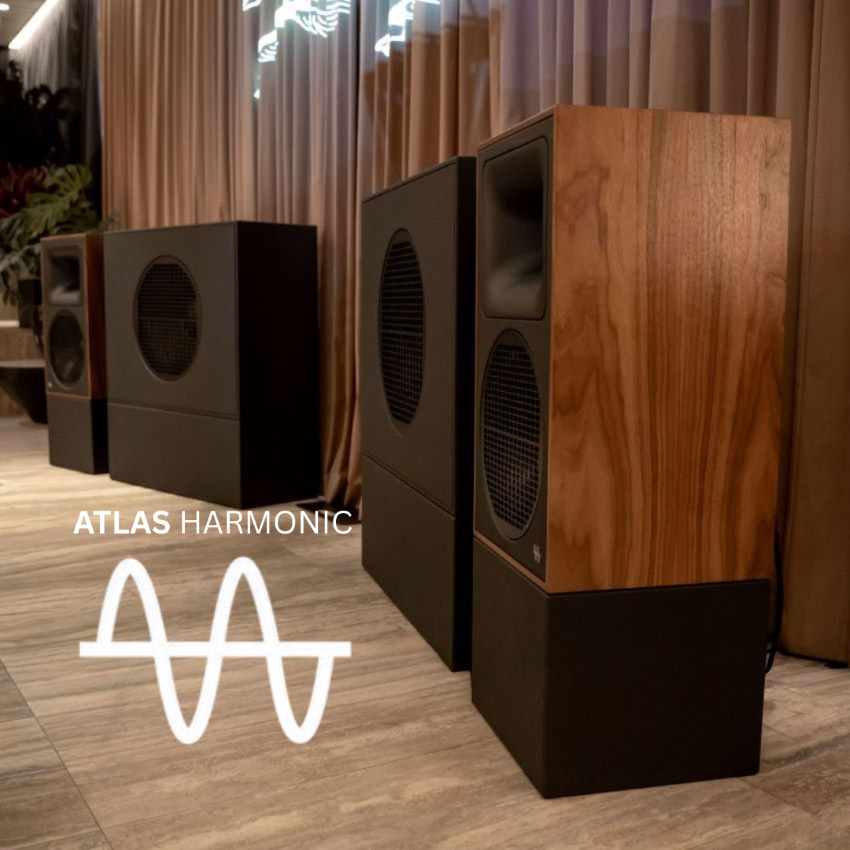
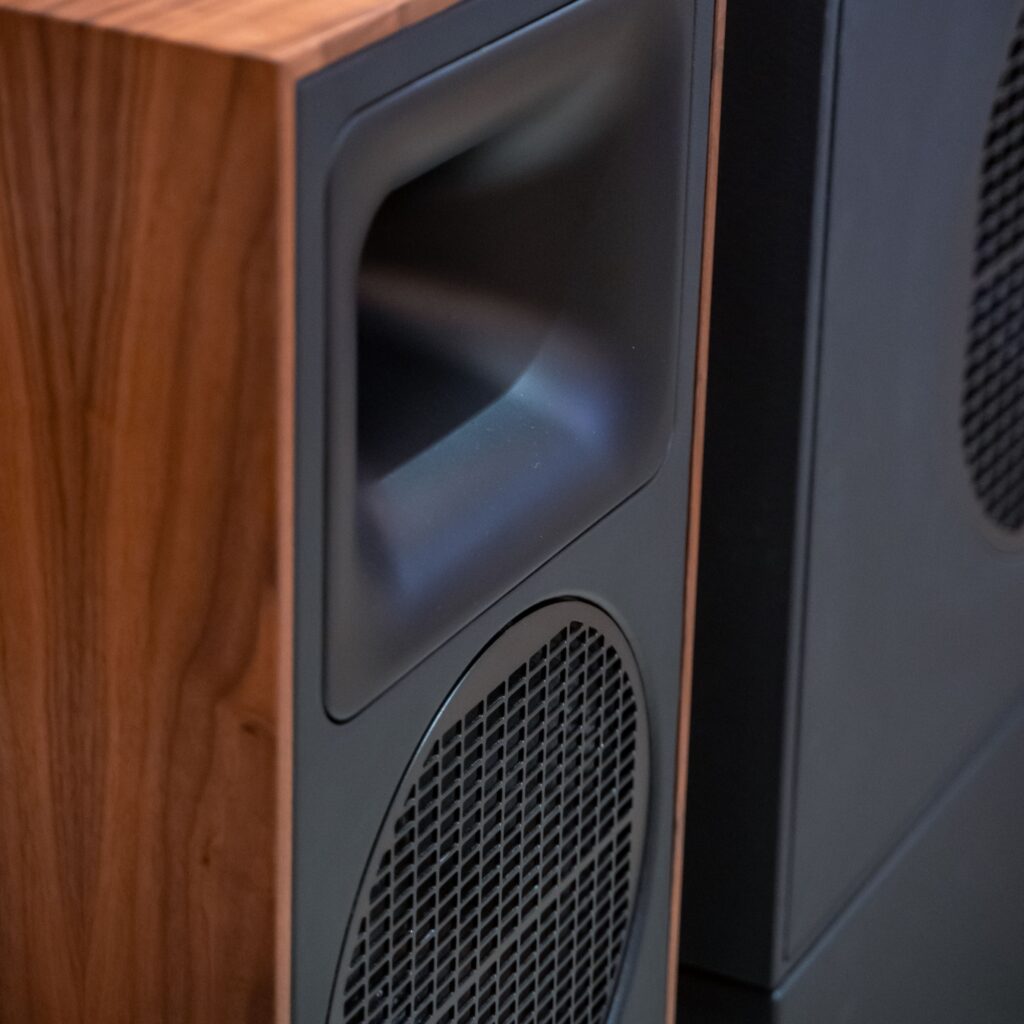
Not An Audiophile – The Podcast featuring Atlas Gouverneur from ATLAS Harmonic and The Speaker Project. Look no further for the young designers drawing new generations of HiFi enthusiasts into music.
Podcast transcripts below – Episode 051

TRANSCRIPT
S3 EP051 Under 40 and Ignoring 30 Years of HiFi design Rules – ATLAS Harmonic
Atlas Gouverneur: Yeah, look, if you asked me this question 10 years ago, I would have been in the camp of, you know, being very technical. If it’s not technical, therefore it’s not good. But as you know, things have progressed and I think a lot of the time, people get caught up with, you know, the gear, they get caught up with, what the actual speaker’s doing. But the most fundamental thing that a speaker needs to do is just give us a feeling.
DEVORE FIDELITY SHOW PARTNER
Andrew Hutchison: Devore Fidelity, the show partner of not an Audiophile, the podcast Devore Fidelity has become one of the most acclaimed high end companies in the world. And having heard the loudspeakers many times, I know why. They’re all still handcrafted in Brooklyn, New York. We love how this iconic brand captures the excitement and breath of the sound. Nothing brings you closer to the music than Devore Fidelity. For a retailer near you, visit devore fidelity.com.
ATLAS HARMONIC
And we are back, not an Audiophile to podcast episode 51 season 3. Today we expose the truth. That’s right. The truth is there is young people in the audio industry, relatively young, and they are appealing with their products to a younger audience. Some say this is not the case. We say it is. Atlas from Atlas Harmonic is an example. Let’s have a listen to what he has to say. And today, we’re speaking to Atlas Gouverneur. How are you going, Atlas?
Atlas Gouverneur: Doing very well, thanks.
Andrew Hutchison: Thank you for making the time to come on the show. there’s a few reasons why we wanted to speak to you. one, you clearly have a pretty, pretty, intense knowledge of loudspeaker design which you’ve clearly been studying vigorously for some years. And, and other, in this case mechanical engineering, qualifications which I guess sets you up well for understanding perhaps the more complex nature of some aspects of loudspeaker design. Is that right?
Atlas Gouverneur: Yeah, it does. And that’s quite the compliment. Thank you.
Andrew Hutchison: Let me compliment you more. You’re not 60 years of age either, right? So I don’t want to know how old you are by the way, but I know you’re probably, I’m gonna say in your 30s.
Atlas Gouverneur: Yes. 30, 36.
Andrew Hutchison: Okay. So do a little bit of applause. it’s, it is nice to have someone younger on the show. and it’s, and it’s, and, and I have a political reason for bringing you on the show as well, which is that there’s other media, audio media outlets talking about how, you know, at the moment they’re talking about how, you know, who is the new generation that’s going to keep the audio business in the audio business. And I mean you’re obviously a prime example of that. So, let’s, let’s talk. we today are speaking about a number of, I guess, design ideas in loudspeakers, that seem like a good idea from the outside but never seem to have really hit the mainstream or have become de rigueur, so to speak. in design. is there any particular. I’ve given you a list of subjects. Is there any particular one that you would like to speak about more than another?
Atlas Gouverneur: they’re quite a few. You know, I, I was thinking recently about plasma tweeters. and it’s something that you very, very rarely see. and I think for very good reasons, incredibly dangerous.
Andrew Hutchison: Well, there is the danger aspect of any technology.
Atlas Gouverneur: Yeah.
Andrew Hutchison: As someone who knows zero about plasma tweeters, why don’t you just tell us what the hell a plasma tweeter is? Since you, I guess you’ve had taken a bit of a look at it as part of your general R and D. Yeah.
Atlas Gouverneur: So plasma tweeters, if you think of a, ah, transducer, to create sound, you’re moving a diaphragm and a diaphragm has a voice coil on it and a magnet around the outside.
Andrew Hutchison: Sure.
Atlas Gouverneur: And you put a variable signal through it, so ac signal. and that will repel and attract towards the magnet and then therefore move the diaphragm back and forth creating sound. the pro of it is that ah, it’s very safe, very easy to use, very robust. downside is that you have a mass, you’ve got a moving mass and we know by, you know, force is equal to mass times acceleration. So if you have a mass, you’re reducing your acceleration, in some degree. and then when we think of a plasma tweeter, it’s actually an arc. It’s just putting an arc through the air. The air will vibrate without any mass. so you can have, you get that benefit. You have very low distortion. You also have fully omnidirectional sound as well because it’s radiating in all directions
Andrew Hutchison: of the arc an infinitely
00:05:00
Andrew Hutchison: fast acceleration, I guess, effectively because it’s impossible to have otherwise, well, limited by the density of the air or something, I guess.
Atlas Gouverneur: Yeah, exactly. And the only downside, and two major downsides is that you need to be operating in the kilovolt range, which is extremely dangerous.
Andrew Hutchison: Don’t.
Atlas Gouverneur: Secondly, yes, you’re ionizing the gas and ozone in your house. And we all know ozone in the atmosphere is great, but not at sea level. So.
Andrew Hutchison: Yeah, okay. Yeah. So.
Atlas Gouverneur: But isn’t there.
Andrew Hutchison: Isn’t. This is not my area of expertise. But isn’t there. And probably not yours. But isn’t there some kind of air conditioning? Not, not. Not in the traditional sense like abducted or split system. But isn’t there some kind of. Oh no, that’s ions, not ozone. Yeah, yeah, ozone. Yeah. Ozone of course is. Yes, yes, yes. Sorry, I got confused. Yeah. Ion generators. Perhaps ions are a good thing. Whatever the hell an.
Atlas Gouverneur: I thought it was going to be turned into a marketing campaign for
Andrew Hutchison: this. Like I said at the start, I have no, no knowledge of air conditioning. So I, I got confused for a second. Yeah, it’s ion you see, not ozone. But yeah, ozone of course is that weird smell that you get whenever an arc, which is something you know as old TV technicians know back in the day. You know, you’d have a. If you had a leaky high voltage thing, you’d get that, that ozone smell. Not, not good. So do plasma tweeter in production anywhere? Is anyone using them, like hiding them behind. How do you, how do you shield it?
Atlas Gouverneur: Yeah, and they sort of like they. That 1970s, 80s they really sort of gained. I wouldn’t say traction but there was a lot more A lot more people using them and that was I think with new. With novel you don’t see them much anymore. But there are some brands that are manufacturing them put enthusiast. None that are found in. Out of five I know commercial available products.
Andrew Hutchison: Yeah.
Atlas Gouverneur: Because of the. Just a risk involved.
Andrew Hutchison: Yeah. So how do you kind of in your research how were people shielding little prying fingers from electrocuting themselves? Briefly.
Atlas Gouverneur: And yeah, just we really have to rely on mechanical guards.
Andrew Hutchison: Yeah. Okay.
Atlas Gouverneur: And probably not have any kids around.
Andrew Hutchison: Well, you know, it’s not the end of the world. Okay. So so there’s a, there’s a classic example. Thank you for that. Where It’s certainly technologically is, is, is an amazing idea. Is there any ah. In your quest for the perfect loudspeaker, did you investigate any other tweeter designs that perhaps are not not known of widely.
Atlas Gouverneur: not in the same sort of range as a plasma tweeters. No. I have like, I think all the other sort of tweeters that I would use certainly are designed to be robust, and safe to use.
Andrew Hutchison: Yeah.
Atlas Gouverneur: And look. And when you look at the there’s not that much test reports to come out about plasma, but based on what I can see, it’s a beryllium tweeter. a very well designed aluminum dome tweeter, will have distortion levels that are comparable. and I will say that back in the 1980s, the tweeters have come very fast since then, you know, with the advent of finite element analysis. Analysis stuff that’s been done. So I don’t think the benefits is as great as it used to be.
Andrew Hutchison: No. In fact, when you think about the weight of a diaphragm versus the restriction perhaps that the air offers, I guess the difference between infinite acceleration and the acceleration achieved by a modern lightweight diaphragm is not. Not dramatically different, is it? Or have you not studied?
Atlas Gouverneur: No, and it’s not really. And when you, the mass, the more mass you add, it just required more power. but if you modulate the acceleration, you effectively change the frequency. so it’s not really important anymore because we can get very powerful amplifiers that fit inside a shoebox.
Andrew Hutchison: Well, indeed, yes. So in fact, here’s an angle that I’m interested because you made an interesting comment that since the 90s, tweeters have improved, in your opinion, dramatically. so that, that nostalgic sort of. And the nostalgia for older speakers is probably more about the bass and the mid range drivers, I think. But would you make a generalization and say that, you know, old tweeter designs are a bit clunky and heavy and frankly, you know, I mean, you’re saying that the new ones are dramatically improved.
Atlas Gouverneur: Yeah, they. And I think a big part as well is like the old tweeters had ferrofluids and which were. They didn’t last. You know, you had to repair them and people just didn’t know about how to repair them. So then 10 years goes by and I go, my speakers sound very dull. Yes, yes, but the modern speakers don’t
00:10:00
Atlas Gouverneur: have that.
Andrew Hutchison: No. Yeah, ferrofluid, absolutely. Gone by the wayside, hasn’t it? I, guess to remind us, was it about, you know, it’s so long ago I’ve kind of forgotten what it was for. I guess cooling was part of it. Was it a damping thing as well? Was it?
Atlas Gouverneur: Yeah, damping and cooling. but I think it’s just mainly because, tweeters become so more advanced. But you know what, this is something I’m gonna have to research more on because now you ask a question and I’m thinking, why Exactly. Did they have ferrofluid? So much? And yeah, something to research.
Andrew Hutchison: It’s. I. Look, I’m old enough, unfortunately for myself, that I, can remember when it came out. It was like a big. It was a rave thing sometimes. Oh, I don’t know, maybe early to late 80s. I don’t know, it was like. Oh, ferrofluid. Yeah, Cooled is the thing that I think they mostly talked about was the advertising slogans. But, I was always a little dubious of it. And then in more recent times, of course, pulling tweeters apart, trying to work out why they don’t measure open circuit but refuse to produce any sound. And you realize, you soon realize why, and the whole gap is just clogged up with this, brown, almost black goop.
Atlas Gouverneur: Yeah.
Andrew Hutchison: I’ve got. On my list I gave you, I’ve got a thing that’s a little bit of a gray area. I’ve got a comment that says emotive connection versus technically correct. And I wrote that even though that’s not really anything to do with a, technology. I mean, do you have. Just before we move on to the next technology that hasn’t really made it, do you have thoughts on that? Because I find myself little bit torn. in other words, you know, lack of coloration, perfect dispersion. Sometimes I feel that those loudspeakers that produce that technically correct outcome don’t connect musically or emotively in relation to the music. Like, say, some old, you know, I don’t know, big thumping, great speaker that’s probably coloured as hell, but, I don’t know, seems to make music. Have you. I know you’ve got a foot in each camp with your own designs. You have large models and you have small and you have passive loudspeakers and you have active. So you’re in probably a good position to put some flesh on this thought, I think.
Atlas Gouverneur: Yeah. Look, if you asked me this question 10 years ago, I would have been in the camp of, you know, being very technical. If it’s not technical, therefore, it’s not good. But as, you know, things, I’ve progressed and I’ve experienced audio more deeply and I’ve even seen more people listen to my design than other designs.
Andrew Hutchison: Yes.
Atlas Gouverneur: And I think a lot of the time, people get caught up with the gear, they get caught up with, what the actual speaker is doing. But the most fundamental thing that a speaker need to do is just give us a feeling. we as humans have this amazing ability to have a, emotional response to music. And so I think the number one thing is that if you get an emotional response to a sound to a certain style, that’s, that’s the outcome achieved. I will say though, I think there’s a little bit of both. Like I said, you know, it’s kind of cliche to say this, but it’s about the balance. But I do think that there are some things that are fundamentally important to evoke a certain feeling, that can’t be negotiated. And they can be negotiated in some very certain instances. And my biggest one is power response and early reflection. So okay, it was done right what to study 1980s in Canada. and they, they did double bind test and they found that a certain way that the speaker would radiate consistently. So it’ll be a downward sloping power response, and that will get a high likeability score. however, if you run this test and you put it up against say like a Apple HomePod, it gets quite a good likability score. However, if you get someone in front of it and you put something like I’m not going to name a brand name, but if you put something that’s, you know, a $30,000 speaker that might get likeability score of five.
Andrew Hutchison: Yeah.
Atlas Gouverneur: I can assure you the person who’s listening to that $30,000 speaker, even without seeing it, it’s going to have a better emotional response just because of the dynamics that are involved that aren’t included in this study. However, if you were to compare Apple to Apples and say a speaker that had the same drivers, everything was the same but one had a better power response. I can most certainly say that someone gonna have more than emotional response to it.
MARCH AUDIO EPISODE SPONSOR
Andrew Hutchison: March Audio March Audio is a proud episode sponsor of the not an audiophile PO With a mission to provide superb technical performance and exceptional sound at modest prices. Alan March has designed a range of power amplifiers, a preamplifier and a selection of stunning loudspeakers that you should check out now@marchaudio.com
00:15:00
Andrew Hutchison: yes, yes. So, to break that down a little bit, you’re saying firstly that the frequency response fitting with that desirable likeability curve is, is only one aspect that the. There are other aspects of I guess quality of you know, bass transient performance and general lack of distortion and I guess detail retrieval or something and therefore adding a bit of zing and excitement is, is. Is to. Is could be similarly important in the likability stakes. Is that the gist of what you’re saying when you mention the $30,000 speakers versus the,
Atlas Gouverneur: Yeah, 45. So, like, one of the common things I’ll see, in. Not all speakers do this, but. And this is a shift that we’re seeing. We’re going, like I call it, you know, I wouldn’t say I’ve coined it, but we’re going into a new paradigm of audio design, which I’m seeing is speakers that have very high likeability scores.
Andrew Hutchison: Sure.
Atlas Gouverneur: and this is the advent, you know, of like, Erin’s Corner and Audio, Science Review. And so they’re pushing this forward and I think it’s great for the industry, because it’s, you know, bringing about innovation.
Andrew Hutchison: Oh, what. So just put a bit of meat on that. So what, what, what are ASR and Erin’s Corner? I mean, I know they. ASR obviously is all about. Well, I thought they were all about measurements only, really. And then basically you, you like hi Fi. Based on whether it measures. Well, I know that’s a gross, slightly disingenuous, generalization, but I, I’ll say it nonetheless because, you know, they, they as a, As a, How would I put it? And I’m not saying this about Aaron, I’m saying this about maybe the, the. The followers to some degree, they’re very hardcore about measurements. Is that. But you’re looking past that and talking more about this power response performance and.
Atlas Gouverneur: Yeah. And I’m just sort of, in a sense that it’s changed. it changed. Hi Fi. There’s still, you know, the Legacy branded and are doing things differently.
Andrew Hutchison: Yeah.
Atlas Gouverneur: But, I think one of the things that we see that consistent in those measurements and consistent in my own experience, like if I design something and I feel like it just. It just doesn’t have that emotional connection, most of the time it’s because I get a suck out in my mids in the power response. And it sort of. It sucks out, it becomes thin there. And you just don’t lose that, you lose that, body. You lose that velvety sound that you can get. and then the tweeter will kick in and then that’s very omnidirectional. And so you get a lot of excess power, perceived power in the tweeter range. And so you’re sitting there and you go, this sounds very brittle. And I, will. And this is the other thing as well, is if you don’t. If you haven’t really listened to hifi that much or that’s all you’ve listened to, you will categorize that, a clarity and go. That sounds really, really clear. Because your ears are picking up on that 3kHz range, you go, that’s clear to me. Yes, but over time, or once you listen to speakers that have more power, you start to go, wow, that sounds so full. opposed to saying that sounds very bright.
Andrew Hutchison: M. So when you mentioned 3K. So we treading on BBC dip territory here or like some kind of engineered slight lack of emphasis on the presence region in a response. Is that sort of. I mean, I know you’re kind of talking about a dip in the power curve in that area. So which is emphasizing the treble. So when you’re somewhat off axis or just the, you know, say you’re halfway, you’re not in the general area of the speakers, you’re some other part of the room. It makes the speaker sound thin and wispy in that room. Is that what you’re, you’re saying?
Atlas Gouverneur: Yeah. And so like when you listen to a speaker, the general thought would be that you’re listening to the first sound that reaches your ears. Right. Like the on axis sound. But really when we listen to a speaker, we’re taking that into account and then all the reflection in the room.
Andrew Hutchison: Yeah, yeah.
Atlas Gouverneur: and so a lot of it, if you don’t have a good power response, those reflection in the mid don’t carry as much volume as say the high treble.
Atlas Gouverneur: And so then your ears will naturally go to that high treble region or that 3khz region where we’re most sensitive to and go oh, there’s more energy there. Yeah, yeah, yeah, yeah.
Andrew Hutchison: Okay. and when. And so where does this is. This is getting a little bit away from what we were intending to discuss, but it doesn’t matter in the slightest. So Aaron, who’s you know, like, I guess he’s a hi fi. Reviewer in a, in a way as a hobby. I don’t know what he does for a real living. I got a feeling he’s a pretty smart cookie. But, but doesn’t he have his own, I’ve forgotten the name, but you know the fancy measurement system, the spinorama. Yeah, yeah, the whatever the name of the actual system that generates those spinoramas. But yeah. Anyhow, you know what I’m driving at? Where does he fit into your improving the world of hi fi. observation?
Atlas Gouverneur: I definitely think it’s accountability.
Andrew Hutchison: Oh,
00:20:00
Andrew Hutchison: okay. Yep, yep.
Atlas Gouverneur: Yeah. And I think it’s, you know, sort of, I think out of my personal take is that a manufacturer is. You have a duty, to provide something that if you’re saying it’s going to be truthful, then it should be. And then that should be one of the outcomes that you’re pushing for sure. but I will say like, you know, not all speakers have to do this. Like we’ve got these multi cell horns that people love would perform dreadfully on this response. But it doesn’t matter. People will look at that and go, that’s really cool. But the history to it. and that’s not, you know, I want background sound. I want, you know, something that sounds reminiscent of that time.
Andrew Hutchison: Yes.
Atlas Gouverneur: Yeah, so did that too.
Andrew Hutchison: Yeah, I guess there’s, I mean, look, looking at it purely from a manufacturers or a business point of view, I mean I feel like there’s a lot of different taste in audio as there is in. We always, in this show start talking about wine, but cars, motorcycles, push bikes, just. I mean whether you walk through a park with earbuds in or not, I mean there’s all these personal preferences. People are doing different things for different reasons. But getting back to listening to music through an audio system, yeah, I mean clearly when you go to a big audio show, there is lots of different presentation styles. There’s kind of a place for, for everything, I guess. But your, I mean you’ve done enough building, designing, listening. You’ve already said it that you feel like it’s just as important to have something that communicates and moves you as something that measures correctly. Have you tried, have you managed to correlate? Can you tell us what the secret sauce is that you’ve, you’ve found so far? Do you think, I mean what, what, what is it that that moves us? I mean you’re saying it’s got to have the right power response. It’s got to fit with, with what Floyd conjured years ago. I guess you’re referring to his. Yes, his workings. you know, smart cookie and did, you know, an enormous amount of tedious work getting. I mean can you imagine wielding these people into a room and trying to. In some kind of controlled way and get sense from them? I mean, what a, what a, what a. What a genius really that he like talk about herding cats. Anyhow, so he, so he’s got all this this literally R D, I guess that, that we, a lot of people sort of follow now. And I, I agree with, I mean the vast majority, majority of it. It just makes good sense. And having spent A lifetime flogging. Hi Fi. Yeah, I mean, you know, I mean you, you have to have a well rounded, pleasant sound. You’re not going to sell your average consumer who walks in the door something that’s thin and screechy or something that’s super bassy and slow and doesn’t have a lot of information, you know, further up the spectrum. I mean it’s got to be basically a balanced performance. Right. And then as you say, the icing on the cake is, is improved levels of actual fidelity. But getting back to like what I said, have you, have you got feelings on? Because I mean for the audience who’s not familiar with your Atlas Harmonic products, you’ve got currently an active. Is it a 15 inch 2 way? What.
Atlas Gouverneur: What’s the size?
Andrew Hutchison: Yeah. Okay, so you’ve got a, A bit of an old school, you know, like some people say it was a PA banger, but clearly it’s not. It’s got a. From my understanding, it’s got some kind of DSP Hypex, I think Hypex class, D module in it that you’ve obviously fine tuned it and made it sound delightful. On the other hand, you’ve got tiny little monitor speakers, so quite different loudspeakers. is that just something you. That’s the sort of the trail or the pathway you followed to get where you are. Ah. If you’re listening to music for your own enjoyment, are you listening to your big Tufnel loudspeaker or are you listening to your small, delicate little, five and a quarter two way?
Atlas Gouverneur: And it’s interesting. It’s like you’re asking this because you set up both of them m in a room and they sound so different. even with a very similar like, like power response. it is night and day. and they both have different effects. Like one. I think one of the. Because one of the things we haven’t really alluded to is as well is that you’ve got the tonality which is the power response of a speaker. But then you got how images in a room and how when you sit in the listening position, you get this big swirling sound in front of you.
Andrew Hutchison: Yeah.
Atlas Gouverneur: that almost wraps around the back of your head. And then you get this big wall of sound. But like the Tufnel more like a wall of sound, where it’s very like, it feels like it’s a big slug of sound coming towards you and you feel the dynamics, you feel the energy hitting you. You can’t do that with a Small speaker, however, a small speaker, when you listen to the soundstage, it gets this very swirling effect, almost like hypnotic. and you know, that’s the smaller baffle. It radiates around the speaker, rather than pushing it directly in front of it. So, and I think as well, like you couldn’t put the Tufnel in a small room. you need a lot of separation between you and the Tufnel and the Tufnels between each other as well. So there is
00:25:00
Atlas Gouverneur: that limitation.
Andrew Hutchison: Is that a function of the bigger bass unit and the horn loading on the mid tweeter? I guess. Is that, is that the way it radiates? It doesn’t come together until you. The wave front’s further from the speaker. Is that part of that or.
Atlas Gouverneur: Yes, if that as well. but it’s also just so much energy that you’re putting into the room. it just like, even with the DSP stuff, it just feels like it’s very overpowered.
Andrew Hutchison: Okay. Yeah. I comment on this based purely on aesthetics. I’ve not heard the speakers in the flesh. I’d like to do that sometime. maybe when I’m in Sydney in a few weeks, we can talk about that. It’d be interesting to make the comparison you’re referring to. But getting back to the Erin’s Corner power response. So you feel like by making that comment you’re kind of implying that the power response thing was not so weighing on people’s minds so heavily in the 70s and 80s. Is that, is that the way you feel about it based on listening to some speakers from that era? Or what’s, what’s your. How do you arrive?
Atlas Gouverneur: Most certainly like a lot of the speakers you look at like you. You would look like. A good example would be ah, a speaker with a 10 inch driver and a 1 and a 1.4 inch dome tweeter, which wasn’t uncommon. you’re looking at a driver that would start to beam. Well like the direct. It’s not omnidirectional at the crossover frequency. So the range is between say 900Hz to 2.5Khz. It’s a big suck out in the amount of power. on access it looks fantastic on the microphone but then when you start to measure it around it, you got hardly any energy in that mid range region. and so it just sounds very, very shouty and it sort of almost demands you to put on very, very warm equipment just to try and tone it down.
Andrew Hutchison: Yeah, well, I guess that’s I certainly concur. while 10 inch 2 way is a very hard thing to pull off, there’s no doubt about it, I’ve tried and failed. you know, this, this, you know, I mean the bottom line is you need this tweeter to be this magical thing that, that can both meet. You know, you can cross it over at a k or 1500 and it still has output at 20k which clearly it probably won’t. so yeah, it’s hard to get away from a three way. Although you’ve managed to do it of course in your own using. I don’t know. Is it because of the horn that you’ve. It goes so low that you can get away with your Tufnel not having an off axis dip.
Atlas Gouverneur: Yeah. So that’s the kind of. If you want to cross down low, you need to use a compression driver. They’ve got extremely high efficiency.
Andrew Hutchison: Yeah.
Atlas Gouverneur: Over 100 dB per 1 watt. and then you’re using a horn that actually shapes the sound so that it will match the dispersion of the 15 inch at the crossover frequency.
Andrew Hutchison: Yes.
Atlas Gouverneur: but it’ll also allow it to sort of ah, pull the sound out. It’s a very specific sort of style of horn. but that’s a general gift of it.
Andrew Hutchison: Yeah, yeah, yeah. So you can pull off a large driver two way but you’ve got to go about it the right way. Do you do. This is once again got nothing to do with what we were going to talk about. Do you have a speaker from the 70s or 80s that you actually quite like? Is there something that you’ve gone wow, that’s actually a bit of a gem or not so much.
Atlas Gouverneur: That’s a tough one. You know, I think. Yes, for sure. I think some of the old JBL stuff. For sure.
Andrew Hutchison: Okay.
Atlas Gouverneur: I really like the sound of that. I’ve heard a, like I did like the, you know, the Altech lantern stuff. Yeah. I did find. I do find it to be a little bit too thin in the bass
Atlas Gouverneur: But I think for what it is is impressive. It has a certain characteristic about it. Got that air. But for my own taste, I would certainly want more bass out of it.
Andrew Hutchison: Yeah. Yeah. Well I guess that’s where there were limitations back in the day of you know, materials, motor power, I don’t know, the ability to both, you know, get a low resonant frequency and you know, and, and some decent sensitivity, I guess. You know, without having a cone that weighed a Kilo or something.
Atlas Gouverneur: Exactly. Right.
Andrew Hutchison: You know, not, not a lot. Not a drive unit designer. Okay, well, we’re going to take a two second break. Atlas. And we’ll be back with Atlas, just after this quick, quick message. Stereonet.com forums, classifieds, news and reviews, opinion pieces. Mark Rushton has built one hell of a website. Stereonet.com Take a look. Today we’re back with Atlas, Gouverneur from Atlas Harmonic. and also the speaker project is that you build kit speakers, I believe.
Atlas Gouverneur: yeah, kits and speaker building workshops.
Andrew Hutchison: Yeah. Okay, cool. So you, you get a group of people in and kind of give them some, I guess, fairly
00:30:00
Andrew Hutchison: rudimentary but you know, guided insight on how a speaker works and how to. And then they build their own or something. Is that what happens?
Atlas Gouverneur: Yeah, so they, it’s a four part series, four evenings and then we go through the, the basics of speaker design, how it’s all done, what it means, and then they build their own speaker. so there’s a couple of kits that they can build from. Some are pretty advanced, like the Truitt R that had the time correction filter in it. Yeah. and, yeah, and then they go along and then by the end they’ve built something that they made themselves cool nuts.
Andrew Hutchison: No one does that. So good on you. And that’s in Sydney, one presumes.
Atlas Gouverneur: Yes.
Andrew Hutchison: Hey, this episode was to kind of be about design ideas in loudspeakers that seem like they’re a great idea and they don’t seem to have, even though they’ve been around for some, maybe even decades, have not kind of hit the mainstream in production. loudspeakers. The obvious one, to use that horrid expression, the elephant in the room or whatever is clearly active loudspeakers. You have a foot in both camps. What do you think? active’s not perhaps more, you know, popular in hi fi. Clearly in pro audio, it is almost, I would say there’s almost no passive speakers left in pro gear. I don’t. Well, obviously in PA there might be, but not in certainly in studio monitoring. Or maybe there is. I really don’t know. I couldn’t tell you the last time I walked into a recording studio. I guess I’m sitting in one right now. In a modern recording studio, I’ve got a rode microphone and a Tascam recorder. A both of them didn’t cost very much money and they both produce amazing results. Never been a better time to have a home studio. But active speakers. and don’t tell me it’s because people like to buy their own amplifiers because we know that. I actually think that’s the main reason. But there must be other reasons, right? I mean, like, they don’t want to because they, they can’t play with the sound of the system so much. Although, can they. Do your Actives allow a bit of tweaking?
Atlas Gouverneur: I think it’s kind of, you know, like when you buy a car, you want to buy the rims, you want to get the tires, you know, you want to get a spoiler. you don’t want it all in one package, you want to customize.
Andrew Hutchison: Yes.
Atlas Gouverneur: And it’s definitely answering your, the way you said it before in a different way. but I do think as well is previously, like 10, 20 years ago, inbuilt amplifier plate amplifiers weren’t that good. Class D technology hadn’t really, one being resolved properly yet. They were still quite grainy. Like the old ICE power amps. They were very common. Yes. solid state external amps. It just sounded way better. And I think we’re still seeing the, the sort of, you know, the the end of that, where people have that in their mind and so they think of it as like, oh, if I’m going to go to plate amp I know I’m gonna get that really bright sound. And it’s still, that’s still stuck in their mind about that.
Andrew Hutchison: Yeah. Yep, yep. Makes sense.
Atlas Gouverneur: Yeah. But they’ve come so far. but that being said as well, like having. Being like, I’ve got passive speakers and I absolutely love, switching between different amps. Like, it’s a lot of fun. You get different sound. You know, some have a high damping factor, some have slightly more distortion.
Andrew Hutchison: Whoa, whoa, hang on a minute. But according to ASR, all amplifiers sound exactly the same.
Atlas Gouverneur: Atlas? and I did read that about the damping factor and I really do wonder if it’s really that true. Because, you go to a speaker that has a really high damping factor, I mean, an amplifier, and you go to one that doesn’t. And it really does sound like there’s a big difference.
Andrew Hutchison: Yeah, there’s a huge difference between amplifiers. I mean, anyone who. Anyone. I think, and I say very few things categorically, I make few categoric statements about hi fi because, everyone’s welcome to their opinion, but anyone who says all amplifiers sound the same is clearly needs to buy better loudspeakers or ears. Would you agree or disagree?
Atlas Gouverneur: I do not understand how someone can make that statement. Yeah. And they sound so different. and even though the loudspeaker contributes, when you look at distortion profiles of a loudspeaker versus an amp, it’s night and day. It’s a loudspeakers that has all the distortion. but even when you plug a different amp in, it has a massive effect.
Andrew Hutchison: Yeah. I mean I review the occasional product and I’m constantly reminded that just how different two good amplifiers can sound. They both have their own set of positive attributes, but they still produce quite different sounding music. And and these are not things that tone controls would change either. You know, they, they are, they just, you know, this is not about frequency balance or response. It’s different ways they have. So. Yeah. So you think Class D’s gotten basically good enough now that a, that a an active module on the back of a box is is a pretty decent solution?
Atlas Gouverneur: Oh, fantastic solution. Like the,
00:35:00
Atlas Gouverneur: the quality you’re getting out of these, Especially like from Hypex, it just. Yeah, it’s amazing. Like you’re competing with very expensive amplifiers in terms of distortion levels. So.
Andrew Hutchison: And of course the damping factor is very good on those, those amps. I understand. Yeah. I love the fact that you can just have an idea or you know, like, oh, let’s try this. And like, rather than mucking around trying to you know, go through the drawers and find some resistors, caps and inductors that are kind of the right value, you, you just dial up what you want. You know, it’s just, it’s ah, it’s great for experimentation. Have you, you’ve sort of used it as a tool like that a little bit in your development of the of the active speaker, the Tufnell.
Atlas Gouverneur: And actually for all my designs, even if it’s going to be a passive, I do it. That’s the workflow. So I have actually in a Hypex amp built into a little bit MDF box and then I’ll take, I’ll take that around and listen to the speakers with different filters. and I would have a look and go how did that sound? Because a lot of the time as well I’m trying to push across over my style to push across over, down as low as I can, for the tweeter until I start to see like okay, that’s distortion. We can’t do it there. Pushing it too hard. and I just go back to the power response as well and it’s a style that I really like. but yeah, you can just listen to it and go, how does it sound? And if it sounds good, you can go, okay, let’s lock that in. and then let’s now build a passive version.
Andrew Hutchison: Do you find, you try different acoustic slopes, orders of slope and just see how that sounds or does that not work in DSP where they don’t. The slopes don’t sound different for the same reasons they do with a passive filter.
Atlas Gouverneur: No, it’s exactly. They both have the same amount of phase shift. and I think one of the biggest, differences in the plate amplifiers or the one with DSP in it is that you can actually delay each speaker driver. Whereas if you were to just have two speakers in the same baffle, you have to consider that there’s slight delay between the Toyota and the woofer.
Andrew Hutchison: Yeah, yeah.
Atlas Gouverneur: And and that affects your filtering as well because, you have to build that into a passive circuit. Unless you do a time delay circuit in there, then. Yeah. So you have to account for that.
Andrew Hutchison: Speaking of time delay circuits, so I’ve seen in your paraphernalia that you mention, a passive time delay circuit. I mean, what was that a long, a really infinitely long piece of wire. So it takes a while for it to get there. Or is it. Why are you laughing?
Atlas Gouverneur: And electrons move at the speed of light. So I imagine I would have to go.
Andrew Hutchison: Be really, really long to go to the moon and back. Lyrics for a song there. so I guess it’s a, it’s a, it’s a, it’s, it’s part of your secret sauce. But can you, can you tell us a little bit about how that might work?
Atlas Gouverneur: Yeah. So essentially what an on delay circuit is doing in a passive, crossover, you want to delay the signal without inducing any slope. so you’re essentially using inductors and capacitors in a certain orientation that will ah, delay the signal at the crossover region by how many milliseconds that you need?
Andrew Hutchison: so it’s a phase shift, but at even across frequency.
Atlas Gouverneur: Exactly. Yes. Ah, so the common way to do it is getting a bit technical, but a common way to get speaker drivers to align, at the crossover frequency is to use varying filter slopes. So use a second ah, order which gives you 180 degrees, and then use a third order which gives you an additional 90 degree of phase shift. And when we say 90 degrees of phase shift, that correlates to a time offset. So that additional 90 degrees or you might be only adding another 50 will give you the right amount of delay between the woofer and tweeter so that they’re in time. But the issue is that ah, it’s only applicable at that crossover frequency. And as you start to get on each side of the crossover it doesn’t align anymore. But with NorPass it it’s aligned perfectly over that crossover region.
Andrew Hutchison: Yeah, the Kind of a bit rusty at the moment. Whenever I’m not in the middle of a design project I kind of forget everything I ever knew and have to relearn it. But the. Which is a function of age, not phase shift. The point is that yes, a crossover, different crossover slopes cause different phase shifts. But only once they’ve started rolling off is that the like when they’re in their passband there is no phase shift, is there? So if you’ve put a third order filter on a tweeter for the passband of the tweeter above that turnover frequency, obviously there is no delay. No phase shift.
Atlas Gouverneur: Is that what you’re trying to say?
Andrew Hutchison: But once it starts rolling off it, there’s a time delay. Is that. Or is it the other way around?
00:40:00
Atlas Gouverneur: And yes. So it means that like say for instance you got like a 2 kilohertz crossover.
Atlas Gouverneur: And where the woofer and the tweeter crossover at 2Khz with the conventional filter. Right. At 2Khz they’re both in phase. But then as you start to move away. So you’re now at 2.5 or 1.5 kilohertz. Yeah, it’s not. They’re no longer in phase with each other. So the summation is not so great.
Andrew Hutchison: No.
Atlas Gouverneur: Whereas if you do a time delay you can get the summation to be following each other off away from the crossover frequency. And the reason why it’s so important, why I like the sound of it so much, it allows me to use true link with Rayleigh filters. Second order.
Andrew Hutchison: Yeah.
Atlas Gouverneur: Which I can get a more gentle slope on the Tweeter, which it balances and let’s go back to power response as well. Balances out the power response because you’re helping the twitter, the woofer, in your region away from the crossover. Sorry, this is very technical and I hope the listeners are following here.
Andrew Hutchison: Many, many will and others have switched off which we would ask them kindly to hang on because we’ll move to something simpler. But I mean an analog time delay circuit was always going to be complex. So You’ve. You, you, you somehow grouped together in some kind of circuit. A bunch of, Well, not a bunch, a quantity. One or two or whatever. Chokes, two caps, whatever. I don’t know. It’s not something I’ve ever read about. As someone who’s studied the cookbook to death. I, I, It doesn’t, it doesn’t come up. So you, you just, you thought this up or you discovered it in some paper somewhere from AES or something, or what, what’s the, what’s the heritage of that? Or is it just mathematics? And you thought, what if I did this?
Atlas Gouverneur: I wish I could say I was that intelligent, but,
Andrew Hutchison: You can say it if you want.
Atlas Gouverneur: No, it was so my journey would just, Going onto forums and reading. And I remember just reading someone talking about this time delay circuit. And I just thought that was so fascinating. I remember looking into it and going, oh, that’s really advanced. I don’t have the time for this. And it was when I first started out, and then as I started building speakers, and this was well into my speaker project days, I had the Truett. and I really wanted to step it up. I wanted to make it something special. And I said, you know what, now’s the time to learn how to build a time delay circuit. And, it’s actually during COVID and I couldn’t go anywhere. Well, now, perfect time for it. And so I just spent weeks just tinkering away to get this, filter to work. And then when it did, it was absolutely amazing because it is a very different sound in terms of. It becomes like, it sounds like, an active system with that time delay. But then you get to use different amplifiers. So kind of in my take, you know, the best of both worlds.
Andrew Hutchison: M. I’m so, you know, my brain’s wandering and I’ve suddenly, as I’m listening to you talking about it, I’ve suddenly thought of series crossovers. I don’t know. Why do you know? because that’s another kooky thing. And that’s something that. Series crossovers are strange beasts. Have you ever read, studied, or experimented with those?
Atlas Gouverneur: I haven’t experimented with them. And I do take my hat off to people who develop them.
Andrew Hutchison: You can make one work.
Atlas Gouverneur: That’s right, yeah. Because both drivers have, you know, affect each other and, they, you know, the benefit is you use very little parts. and you’re not. It’s not in the direct signal chain.
Andrew Hutchison: No, I just find them completely intriguing because. But you said you were talking about crossovers and you said covert and you had a lot of time on your hands. And I immediately thought series crossovers because I think you need a lot of time on your hand to get one to work properly. But when they do, they quite. They’re such a, such a neat thing, aren’t they? You know.
Atlas Gouverneur: Yeah, they are.
Andrew Hutchison: Yeah. Anyhow, we won’t. We know why people don’t use series crossovers, and I think it’s because there’s no real software and parallels us just. Which is a traditional. What everyone builds. When we talk crossovers, folks who are not wondering what the hell we’re talking about a series crossover, the signal kind of almost passes through both drivers in series like, you know, like batteries and a torch, doesn’t it? I mean it’s, it’s And so the character of the impedance characteristics, et cetera, of or reactive characteristics of the voice coil in one driver affects the response of the other one or something like that. Anyhow, out of my league. hey, there’s a list of things there to wrap up today. Atlas that are, things that I’ve listed that I feel they’re both older ideas in a way, but, but ideas that have just. That have disappeared or never quite made it.
FIRST ORDER FILTERS & SPEAKER BOX MATERIALS
One is, I mean first order filters used to be what everyone used and everyone’s gone away from them. Maybe you can throw some light on why that is. and then the other one, is. What is the other one? Well, yeah, I guess you must have tried. I mean, what do you feel about MDF versus plywood?
Atlas Gouverneur: Ah, ah. Yeah. I think, they both have their benefits. I think a lot of people used to sort of, you know, go on. MDF isn’t good. It’s a cheap material. But the benefit that it has is that it got great damping. It’s very dense. It’s dense for cellulose material and it had the inherent damping, properties in it. So when you think of a speaker driver that doesn’t have any damping, it rings. And then if you have good damping, it, you know, it sounds like a dead box. But I think the way I’d like to make my speaker box is it to use both plywood, a composite plywood on the outside, and then MDF damping, bracing inside, which adds the mass and it has the damping properties in it.
Andrew Hutchison: Do you have, Speaking of mass, do you have a, do you have a thought on if you could have an infinitely light speaker enclosure? Would that be a good thing or a bad thing?
Atlas Gouverneur: and yeah, the two fields of thought there, an infinitely light one will bounce back. So it wouldn’t rob, it wouldn’t per se rob any energy from the speaker driver itself. And it would act like a pure spring. the only issue is that the cabinet then would then bounce around like a spring and it would become a
Andrew Hutchison: radiator, which then immediately changes the mass. What if you screw. What if you screwed it down to a solid object, but then effectively that becomes the mass of the enclosure, doesn’t it? So then it’s infinitely heavy.
Atlas Gouverneur: Yes. yeah, there’s, you know, two field. The two thought experiments. What would happen if you have an infinitely light with, maximum stiffness or you had a speaker driver that was infinitely heavy with zero stiffness, like a bag of sand, kind of thing. And I would think the bag of sand would, would win.
Andrew Hutchison: Yeah. Yeah.
Atlas Gouverneur: Could you get the damping? You, you want that damp sound. You don’t want the speaker enclosure to be irradiator itself.
Andrew Hutchison: And then what if you put a cat in it?
Atlas Gouverneur: Hello.
Andrew Hutchison: Sorry, I suddenly thought of Schroda’s cat some reason. Take the bass driver out. I don’t know. Is the cat really in there? I don’t know. Is it alive or dead anyhow? no, it.
Atlas Gouverneur: The thing is, it’s good.
Andrew Hutchison: Well, there is a, I love cats, by the way.
THE HIFI SHOP
Find the sound of your life by crafting a, quality stereo system with the hi Fi Shop. Featuring all the brands you know and love. Rega turntables, Bowers and Wilkins loudspeakers, Exposure electronics, amplifiers and CD players from the uk and of course, Sonus Faber loudspeakers from Italy. The hi Fi Shop helps you create your sound. Visit the team@hifi shop.com au
BACK WITH ATLAS HARMONIC – SPEAKER BOX DESIGN
it’s, it’s Yeah, I said infinitely light. But then it kind of doesn’t work, does it? Because it just floats. It literally to. For it to be light, it literally has to almost float. And then actually the. Probably the closest thing to an infinitely light box is a super light plywood box that’s suspended, hung by chains. People used to, to do that. I’m not sure. I can’t honestly remember whether that worked well or not. Anyhow, I think we’ve gone sideways. The thing is, you quite like plywood as well, is the gist of it. Have you ever built just a plywood box?
Atlas Gouverneur: I have.
Andrew Hutchison: And did it have a certain transparency in the mid range? Because this is my belief Is that the ones I’ve built, I always feel like the mid range has got a, is more open and has a certain clarity, a lack of clouding that I feel MDF brings on. But it could be just my poorly designed MDF boxes. But what do you feel There’s a bit of that there or you haven’t found that?
Atlas Gouverneur: I. Look, I haven’t found that. Only reason why I haven’t been able to make a deduction is I’ve always just strived to have very overly braced boxes and the differences wouldn’t, wouldn’t matter. Like the amount of unsupported area because of the amount of bracing.
Andrew Hutchison: Yes. Yeah. Okay. Yeah, I’m, I am referring to a BBC style lossy box that I, that I manufacture that I, I think it’s got something special in the mid range. But it, it actually could be more to do with the design of the enclosure than the material that I used. Although you did mention to me at some point that plywood is dramatically stiffer than mdf. So there’s. But then if you brace the hell out of it, what does it matter? Is that what you’re saying?
Atlas Gouverneur: Yeah, like the bracing had a much, much more profound impact than the actual material itself.
Atlas Gouverneur: or the same thickness that is. But yeah. So if you didn’t have an unsupported. Like if you were to have a box with not braced and you were to compare an apple. Ah, ah, an apple to a pair. If you were to compare with
Andrew Hutchison: or without a cat.
Atlas Gouverneur: If you were to compare a plywood speaker box with the MDF speaker box, the plywood would definitely win only because
00:50:00
Atlas Gouverneur: the plywood would deflect around about three times less than the MDF for the same thickness. and so we’ll have less effect, in that instance. But yeah, and look, this might be an experiment we have to do.
Andrew Hutchison: Yeah, well, I’ve, I have done actually a lot of. Well, I’m, you know, I’m in the joyous positioning of having my own sort of cabinet factory. So I can, I can play with ideas. And a long time ago when, during COVID when I had more time, I did play with plywood versus MDF a lot and played with bracing versus unbraced and you know, the lossy box idea and all of that. And I did, I still ended up, I felt I’ve developed two plywood boxes and one’s braced a, lot, you know, lots of bracing but, but lots of damping material as well. Like my idea of an equivalent of a bitumus pad everywhere. And I feel both boxes sounded better in the mid range. But. But. And that. And that’s where the question comes from, is that plywood could be generally regarded as sounding better. Although you’re saying if you brace it correctly, no difference. And I’ll. I respect that because. Makes complete sense. I mean, let’s face it, the panel can’t vibrate because there’s so much bracing. Then, you know, surely it doesn’t matter what the material is. In fact, material with internally damped, a bit like MDF surely is a. Is a better material in that situation. Maybe. But, yeah, I just. There was a certain charm to both of them that I felt. You know, our MDF boxes, not so much. But, I mean, not to say the MDF were bad. They were braced enough. They were basically inert. I always feel there’s this slight muddiness to an MDF box, which, you know, it’s. It’s probably imagined. It’s like a lot of things in hi Fi, right? You think it should sound this particular way. So you kind of cast that aspersion on your ear.
Atlas Gouverneur: And it definitely makes sense to me, like, what your statement was about being muddy, because it’s moving more. And one, if it’s moving more, it takes more energy away from the speaker driver. And two, it’s, It’s. It’s actually vibrating and creating, if resonating the air on the outside of the speaker box, which you are here out of phase with the original woofer. But one thing I will say about all of this is that the biggest thing that I’ve ever changed over MDF plywood discussion is actually lining the inside with lead or rubber. that, to me is especially in the low, like the low range, of vocals. I think that probably because we can hear changes in vocals very well. but, yeah, once you line it, you really hear the clarity come through. You don’t get that sort of. Sometimes you would hear it and you can hear the little spike and resonance in the vocal.
Andrew Hutchison: Yeah, yeah, yeah.
Atlas Gouverneur: and that goes away when you line up with a damping material.
Andrew Hutchison: You mentioned lead. Very out of fashion, but such a great material for that purpose. You can see or imagine or understand why they used it back in the day. Have you. Have you actually, because weirdly, you know, you can. You can buy lead at Bunnings, right?
Atlas Gouverneur: That’s where I buy it from. Yeah.
Andrew Hutchison: For American listeners, that’s, Oh, I’ve forgotten the name of The American hardware store chain.
Atlas Gouverneur: Geez.
Andrew Hutchison: whatever it’s called. Anyway, we know the point is Bunnings is the, is an enormous general, hardware store which you know, put every other.
Atlas Gouverneur: Home Depot.
Andrew Hutchison: Your Home Depot was. Yeah, thank you. and yeah, they got everything in there. Right. Ah, and sometimes I used to wander around in there for sort of material ideas. And I’m sure you’ve probably done the same where you’re like, maybe there’s something that’s just common as hell off the shelf that I can use for this purpose. And, and sometimes there it is. Particularly of course in speakers. It would be, you know, plumbing stuff for, for ports probably. But yeah, so yeah, so you grab some lead from Bunnings and you, you ran the experiment and you were putting pretty happy with the outcome was what you’re saying.
Atlas Gouverneur: Yeah, because I’ve built so many Tourette and Truetta, ah, cabinets. and I have so many floating around that are able to do this. and I found that I actually couldn’t hear a difference between the two outcomes. One was using, I think it’s around about 1 1.2 mil thick lead.
Andrew Hutchison: Yeah.
Atlas Gouverneur: Versus 4 millimeter, thick rubber.
Andrew Hutchison: Okay. So much the same outcome for the, between those two. Yeah.
Atlas Gouverneur: Right. and slightly heavier in the lead department, but still incredibly heavy. Like we’re talking like a two way speaker with a five inch woofer weighing in around about 20 kilos.
Andrew Hutchison: No, that’s, that’s definitely going for the infinite heavy design idea. So.
Atlas Gouverneur: Yes.
Andrew Hutchison: Yeah, that’s actually, yeah, that’s super solid. Yeah. Okay. All
Atlas Gouverneur: Right. And you actually hear it like if you pick up the panel before you glue up the speaker, you can knock it on your, you can knock your hand on it and you can hear like the, the sound of it without it quite, you know, you can hear the knock, knock, when you put the rubber or the lead on it. It, it has like, you hear a little bit of it, but it’s substantially softer in volume.
Andrew Hutchison: Yeah, yeah, I, it’s an interest. Look, it’s a, it’s, it’s. I find it a very interesting subject because of course it is,
00:55:00
Andrew Hutchison: it’s very much, it’s like the, it’s like building guitars but in reverse, you know, like, it’s in the sense that you’re obviously part of the art of a guitar maker, I guess is getting the body to produce a rich, pleasant, exciting sound. And of course in loudspeaker design it’s kind of the opposite. You want it to produce in theory, no sound, I guess unless you can. And which is where I feel the BBC lossy box where you’re trying to try to work with the resonances more than get rid of them completely. which maybe is a decent compromise. now I’m gonna, Well, we’ve come this far. How about I just ask you one other question and then and I’ll let you go and get on with your day.
ISOBARIC LOUDSPEAKER DESIGN
I’m going to ask you about isobaric. Have you ever experimented, in that Or you feel it just is a waste of time?
Atlas Gouverneur: Look, I have never made an Isobaric and I think, I think it’s a fantastic solution to space. Yes. Yeah, yeah. Reduce the cabinet volume, and then you’ll get the lower tuning frequency. But. And I’ve heard your designs and I. You can see how small. Like, you know, it’s not exactly small that floor standard you have. but it definitely goes down way lower than you’d expect it for a size.
Andrew Hutchison: Yeah, that’s. It’s funny you should mention that because we don’t talk about that loudspeaker much, but. But actually that’s a twin. Well, it’s not a twin 10 inch. It’s one 10 inch exposed to the outside world. But there’s a second one hiding inside. And even I kind of are impressed by that because it does. There’s two things going on. It’s a sealed Isobaric, which I think is the only kind of isobaric that really works. As far as a transient response, it is quite articulate within reason. Goes quite deep within reason. But yeah, it’s not a, it’s not a big box, but it’s way bigger than an AI one, if you know what I mean. Because the problem is the packaging of isobaric, if it has a problem, is how do you make those two drivers work together and enable being able to get like physically mount the second one in such a way that you don’t waste a lot of space just making it happen. And that’s, that’s one of the negatives. But, It is, it is. It’s not so much because I have been involved with isobarics that I mentioned, it’s more. It’s more like really no one kind of makes one anymore except me and three other people. There’s, there’s really. And I don’t know who the other three people are, even Totem in Canada who used to make a very good one. I Don’t know that they make any anymore either. But, I feel like there’s one other person, one other manufacturer. But anyhow, Yeah, that’s why I asked, just in case you’d experimented with them because they’re. They’re great for, getting bass extension out of a smaller box. But guess what? In the scheme of things, I don’t know that bass extension. This is one thing I’ve learned along my path of loudspeaker design on and off for a very long time, is that I’m not sure bass extension is that important. You know, I. You know, what’s important is tuneful bass that goes reasonably low. Do you have a feeling on that? And we’re getting away from our original subject, but do you m. Have thoughts on that?
Atlas Gouverneur: I feel like bass is, you know, it’s what grounds the music. It’s what it was get, you know, you moving. It’s what, like, carries the whole music itself. And I thought, you know, experiment is to listen to a speaker that only had a cutoff of 200 hertz.
Andrew Hutchison: Oh, that’s not good.
Atlas Gouverneur: No. And then. And then you think of a speaker that had a cutoff of 40 hertz.
Andrew Hutchison: Yeah.
Atlas Gouverneur: and then you have a speaker that has a cutoff of 20 hertz. And you can sort of imagine what the differences are. I think. Here’s the thing that I think, it does change your listening experience. Sometimes if you go too low in a speaker, it becomes a little bit, Especially in the room that you’re sitting in, it can become a little bit distracting. And so, especially when it starts to, go very low, you start to start to think about, oh, I feel my couch rattling. I feel, you know, my.
Andrew Hutchison: It energizes the room a bit much. Unless the room is really optimized for it, I guess. Otherwise, everything rattles, I suppose, to some degree. Is that what you’re kind of driving it? Like, the floor starts vibrating if it’s not a concrete floor.
Atlas Gouverneur: Yeah, yeah. But. Yeah, if you have the room that’s right for it, Especially if it’s, you know, got bass traps that sound amazing. It’s like. Especially if the bass isn’t, you know, 10 decibels above everything else. but I. I would always try and go down lower. I think that’s always been the objective for me, because it just does make it more enjoyable.
Andrew Hutchison: Yeah. I should clarify my statement more with that. extension is the goal always. But also a correct alignment and getting that lack of distortion and a good transient performance. I Feel is equally important. And so a massive trade off for bass extension could
01:00:00
Andrew Hutchison: result in slightly less enjoyable bass because you’ve kind of ruined other aspects of the performance.
Atlas Gouverneur: Yeah. I think you’re saying no for sure.
Andrew Hutchison: Yeah, yeah. I sort of. Yeah, I shouldn’t just. I love bass extension. I think as a full range speaker that genuinely goes flat like 3db down at 20hz and 3db down at 20K is, is, is really what all loudspeakers should be. But it’s just about impossible to achieve, isn’t it really? It’s certainly without it being big. yeah.
Atlas Gouverneur: On that, just one thing I would like to throw in there is because one of. I don’t know if you’ve saw. I did the Tufnel and Zeus setup, and I specifically chose a ported design for the Zatus which is a 20, 21 inch,
Andrew Hutchison: Oh, the Zeus being the big bass bin. Yeah, box subwoofery thing. Yeah, yeah, yeah, yeah.
Atlas Gouverneur: And I had, you know, just you know, a design choice. Ported, sealed or a folded horn.
Andrew Hutchison: Yeah. Okay, well tell us about that. Yeah, I’m sorry, what size is the bass unit?
Atlas Gouverneur: Huge.
Andrew Hutchison: 20.
Atlas Gouverneur: 21.
Andrew Hutchison: 21, yeah.
Atlas Gouverneur: All right. Yeah, with a, ah, 22,000 watt peak.
Andrew Hutchison: Okay. So it should make a noise.
Atlas Gouverneur: Yeah. So 2,200 watts. Sorry. so quite a lot. And so, and one of the things, because I’m, you know, I don’t know, you might do be going to nightclubs. I certainly do. and one of the things I notice a big thing about nightclub systems is a lot of them run, horns, folded horns and power flex or something like that. And they’re very efficient. they can have 6 to 12 decibels gain over a ported design. but the issue is that they have a whole lot of delay, a lot of group delay. And you really feel it like you’re listening to your music and you can really hear that, especially when it’s excessive, that the bass is just, it’s hitting you before the top of the drum and it’s like this sounds like a different instrument. It could be so far back.
Andrew Hutchison: Yes, yes.
Atlas Gouverneur: and so, and then you look at a sealed enclosure which has the least amount of group delay, which is very, very tight. but then it has, you know, a six, shallow, ah, roll off. But then you go ported and it’s, you know, I think it is absolute benefit. Best of both worlds.
Andrew Hutchison: M. Yeah, a well executed Porter design is, is very hard to beat. I think, you know, it’s but then there’s a, there’s a whole conversation there about the way those two boxes sound and it’s probably completely to do with the way it rolls off. you know, a sealed box in theory is quicker sounding, but it can sound slightly less punchy, I guess.
Atlas Gouverneur: Yeah. Less meaty. Yeah.
Andrew Hutchison: Than a ported box which has got this, I guess it’s got more of a knee to the lower end response and it just, I don’t know, just whacks you in the guts a little
Atlas Gouverneur: harder and it’s more efficient as well. So you get more out of it.
Andrew Hutchison: Yeah, yeah.
Atlas Gouverneur: I think another, another point that is worth mentioning is it’s port noise. a lot of ported designs will have some, not all of them, but will have some degree of chuffing or port resonance. And then that will also give an illusion of there’s something else in there that. A bit muddy.
Andrew Hutchison: Yeah.
Atlas Gouverneur: and that sealed box won’t have that.
Andrew Hutchison: Did. Yeah, well that’s the purity of the of the sealed boxes. or even a passive radiator where you just get, get rid of that port noise. That’s certainly one decision. Distinct advantage of both of those two alignments. or sorry, methodologies. how big a port did you end up with? This 21 inch driver. It must have been, I mean not that the driver’s a function of the size of the port, but. But the box, how did it work out?
Atlas Gouverneur: Is it.
Andrew Hutchison: Do you end up with actually a sensible port?
Atlas Gouverneur: it’s actually not too bad. I think it’s around about, it’s around about 500 or 400, 600 millimeters. it’s a slot port 600 millimeters long by around about 5 centimeters or 6 centimeters high.
Andrew Hutchison: Yeah. Okay.
Atlas Gouverneur: but I’ve actually done it so that, that design, it served both. You know, I built that for a listening event and which I’ll do more of, but I built two ports actually I built one port for lower listening which allows me to have a smaller cross sectional area which can allow me to go deeper. But when I want to use it for parties or really high output, I switch it over to another port that’s built for loudness.
Andrew Hutchison: Are they solenoid actuated or something? No, it’s obviously separately screwed in from the front, I presume.
Atlas Gouverneur: yes.
Andrew Hutchison: Yeah. Okay, look, Hey look, I think we’ve covered a lot of ground. I think it’s a great introduction to who. Atlas at Atlas Harmonic is. It’s been great to sort of hear your insights. We’ve kind of gone off, off, off, off in an odd, completely different direction. I don’t think it matters. It’s been a fantastic chat. My apologies both of our faults. It’s. It’s been very, very interesting, and love, to catch up with you, in a few weeks when the Sydney, audio show is on,
01:05:00
Andrew Hutchison: which is at the start of May for those who are listening and live in Australia and want to get a taste of at least a reasonable selection of cross section of different kind of audio equipment. And there’s a lot of Australian manufacturers actually at that show, which is part of the reason why I’m going to talk to some of those people. But if we can catch up with you, that will be something we’d love to do, again, then in person. And thanks for getting on the phone today, Atlas.
Atlas Gouverneur: Thank you, thank you for having me.
Andrew Hutchison: Absolute pleasure.
Atlas Gouverneur: Thanks.
DEVORE FIDELITY WORLD TOUR
Andrew Hutchison: Devore Fidelity show partner at not an Audiophile the podcast. John Devore is the founder and top banana at Devore Fidelity and he’s currently on a world tour. one stop in his world tour, other than various dealer stores, et cetera, is, exponent, exponent on 10th 12th of April. And the product will be there. Go and have a listen. They’re stunning. Thanks for listening.
01:06:04